Products
 Bars
Bars
 Beads & Spheres
 Bolts & Nuts
 Crucibles
 Discs
Discs
 Fibers & Fabrics
 Films
Films
 Flake
Flake
 Foams
Foams
 Foil
Foil
 Granules
 Honeycombs
 Ink
Ink
 Laminate
 Lumps
Lumps
 Meshes
 Metallised Film
 Plate
Plate
 Powders
 Rod
Rod
 Sheets
 Single Crystals
 Sputtering Target
 Tubes
Tubes
 Washer
 Wires
Wires
 Converters & Calculators
 Write for Us



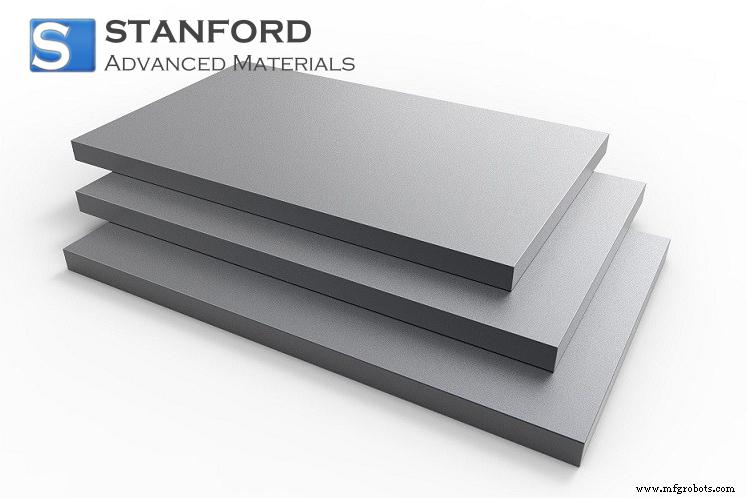
Custom Molybdenum Plate for High-Temperature Furnace Structural Components in Italian Industry

Customer Background
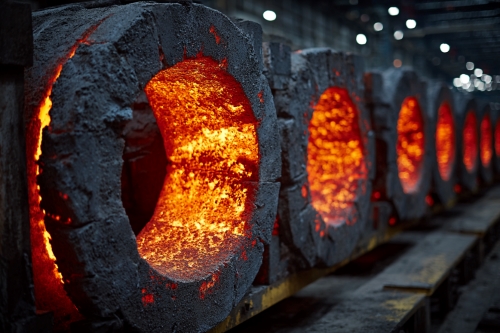
A reputable industrial equipment manufacturer based in Italy required a critical component for their high-temperature furnaces and thermal processing lines. With decades of operational experience, their production lines depend on components that can sustain elevated temperatures with consistent mechanical integrity and minimal deformation. The customer had previously faced challenges with off-the-shelf materials that did not offer the required precision in thickness and flatness, ultimately compromising the stability of the furnace structural components.
Our team at Stanford Advanced Materials (SAM) was approached with a specific request for a molybdenum plate that not only matched stringent technical criteria but also ensured reliable performance under extreme thermal conditions. With over 30 years of experience and a highly customised approach to material supply, SAM was in a prime position to address the client's precise requirements.
Challenge
The fabrication of the molybdenum plate posed several technical and logistical challenges:
· The customer's design required a molybdenum plate with a specific thickness of 20.0 mm ±0.05 mm and a flatness tolerance of less than 0.5 mm across the entire plate surface to ensure compatibility with the furnace's structural design.
· The purity of the material needed to be over 99.90% to resist high-temperature oxidation and potential material degradation during continuous operation.
· The plate had to maintain dimensional stability under thermal cycling up to 1200°C, a factor crucial for the longevity and performance of high-temperature furnaces.
· Time constraints were critical. The installation schedule demanded a lead time that previous suppliers were unable to meet due to complex supply chain challenges and non-standard material specifications.
These combined factors necessitated a finely tuned solution that would not only meet but also sustain rigorous operational demands over time.
Why They Chose SAM
The team evaluated several suppliers, but they chose SAM largely due to our expertise in customising advanced materials and our long-standing history of reliability in challenging industrial applications. Here's why:
· Our detailed review of the project requirements prompted early discussions on how to best achieve the required dimensional tolerances and material purity. We questioned potential stress points, thermal expansion properties, and the impact of machining on final performance.
· SAM's approach included a preliminary design assessment, which offered constructive feedback and suggested minor design adjustments that improved thermal stability and ease of installation.
· Our ability to offer tailored fabrication addressing specific thickness and flatness constraints within the tight lead time was unparalleled. The flexibility offered by SAM allowed the client to maintain their project schedule without compromising on quality.
Solution Provided
To address these challenges, our team implemented a multi-faceted approach:
· We began with sourcing high-purity molybdenum (99.90%+), ensuring that the material would withstand extensive exposure to high temperatures without significant degradation. Quality assurance measures were applied throughout the procurement process.
· The powder metallurgy process was optimised to produce a near-net-shape blank, reducing the need for excessive machining while preserving the fine-grain structure necessary for consistent thermal performance.
· Specialised CNC machining was carried out to achieve the exact thickness of 20.0 mm with a tolerance of ±0.05 mm. Concurrently, surface finishing processes and precision grinding ensured a flatness error of less than 0.5 mm over the entire surface area.
· Additional quality control checks were enforced post-machining. Dimensional verification and thermal cycle simulation tests confirmed that the plate could handle cyclic stresses up to 1200°C without warp or deformation.
· Packaging played a crucial role in maintaining the plate's surface integrity during transit. The component was vacuum-sealed and cushioned to prevent any mechanical impacts or surface oxidation that could compromise its performance on-site.
Results & Impact
The fabricated molybdenum plate met all the established technical criteria and performed reliably under actual operating conditions. The high precision in thickness and flatness provided a structurally stable component that improved the overall durability of the furnace assembly. Real-world testing showed:
· Dimensional consistency that reduced installation difficulties and minimised the need for on-site adjustments.
· Enhanced thermal stability, as verified by thermal cycle tests, which ensured that repeated exposure to high temperatures did not induce any measurable deformation or loss of structural performance.
· A significant reduction in maintenance downtime resulting from improved material performance, thereby enhancing production continuity at the facility.
Although regular process adjustments remained part of the operational protocol, the reliability of the molybdenum plate allowed the customer to focus on optimising furnace runtime and reducing the frequency of replacement components.
Key Takeaways
This case reinforces several critical points for high-temperature industrial applications:
· Precision in material fabrication—achieving stringent thickness and flatness requirements—is essential for components operating under extreme conditions.
· Material purity and careful control of the manufacturing process are as important as the mechanical properties expected during high-temperature use.
· Early and detailed engagement with the supplier can lead to design improvements that enhance overall component performance, reducing the incidence of in-service issues.
· Efficient packaging and handling procedures are vital to preserve the material's integrity from the factory floor to the installation site.
Our work illustrates that addressing complex operational constraints leads to tangible improvements in product performance and reliability. With a proven supply chain and a commitment to quality and customisation, Stanford Advanced Materials (SAM) continues to support industrial leaders in maintaining high standards in their high-temperature applications.

 Dr. Samuel R. Matthews