

 Products
 Bars
Bars
 Beads & Spheres
 Bolts & Nuts
 Crucibles
 Discs
Discs
 Fibers & Fabrics
 Films
Films
 Flake
Flake
 Foams
Foams
 Foil
Foil
 Granules
 Honeycombs
 Ink
Ink
 Laminate
 Lumps
Lumps
 Meshes
 Metallised Film
 Plate
Plate
 Powders
 Rod
Rod
 Sheets
 Single Crystals
 Sputtering Target
 Tubes
Tubes
 Washer
 Wires
Wires
 Converters & Calculators
 Write for Us



Custom Stainless Steel Honeycomb Core for Aerospace Sandwich Panels in Switzerland

Customer Background
A well-established aerospace manufacturer based in Switzerland has long been a key player in advanced aircraft design. Tasked with the development of highly reliable sandwich panels used in both structural applications and energy absorption systems, their design team sought to balance weight reduction with high-performance load distribution. The company had assembled significant in-house expertise in lightweight core materials, yet they faced ongoing challenges in sourcing a material that reliably met their exact cell size, dimensional precision, and bonding requirements.
The manufacturer had engaged with various suppliers over the years but continued to encounter difficulties in achieving consistent performance during both laboratory testing and certification trials. In their latest project, the need for a custom stainless steel honeycomb core with specific cell dimensions became critical, as it would directly influence the safety margins and structural integrity of the final aerospace components.
Challenge
Designing a honeycomb core for aerospace sandwich panels involves several technical challenges, particularly when precise cell geometry and material performance are critical. The customer faced several key hurdles:
1. Dimensional Accuracy and Cell Size:
The required honeycomb core needed custom cell dimensions, with a target cell size of approximately 5 mm across, maintained with a tolerance of ±0.05 mm. Variability in cell size could lead to inconsistencies in panel performance and a potential compromise in energy absorption capacity during impact scenarios.
2. Material Purity and Consistency:
The stainless steel used in the honeycomb structure required a purity level of at least 99.8%. Variability in material composition or grain structure could affect the honeycomb's ability to maintain strength under cyclic loads and during thermal fluctuations.
3. Structural Integrity and Bonding:
For aerospace sandwich panels, the bonding process between the honeycomb core and the external face sheets is critical. The challenge was to ensure that the honeycomb panels not only met the geometric specifications but also offered a stable bonding surface to support adhesive and mechanical fasteners. Poor bonding or an imprecisely machined surface could result in delamination under high stress.
4. Lead Time and Compatibility Constraints:
With the aerospace schedule under tight deadlines, the customer emphasised the necessity for rapid prototyping and final production delivery. Any delay in core material delivery risked postponing the entire certification cycle, which was already delayed by previous iterations with alternative suppliers.
Why They Chose SAM
After evaluating several suppliers, the aerospace customer chose to work with Stanford Advanced Materials (SAM) due to our decades-long track record in custom material solutions and our global supply chain efficiency. From the onset, our team approached the project with deep technical insight and an understanding of both the manufacturing nuances and the rigorous aerospace standards that needed to be met.
Our proactive responses, such as inquiry into the cell integrity, verification of dimensional tolerances, and discussion on bonding techniques, resonated with the customer's need for precision. The customer found that our willingness to engage in detailed engineering discussions and offer practical feedback on the design parameters set us apart as a reliable partner for advanced material solutions.
Solution Provided
At SAM, we addressed the customer's requirements through a series of carefully executed steps:
Material Selection and Quality Control:
We began by selecting a high-grade stainless steel with a purity level greater than 99.8%. Control over the chemical composition and grain structure was critical. Our team ensured that the material sourced exhibited a consistent yield strength suitable for high-load aerospace applications.
Custom Machining for Precise Cell Dimensions:
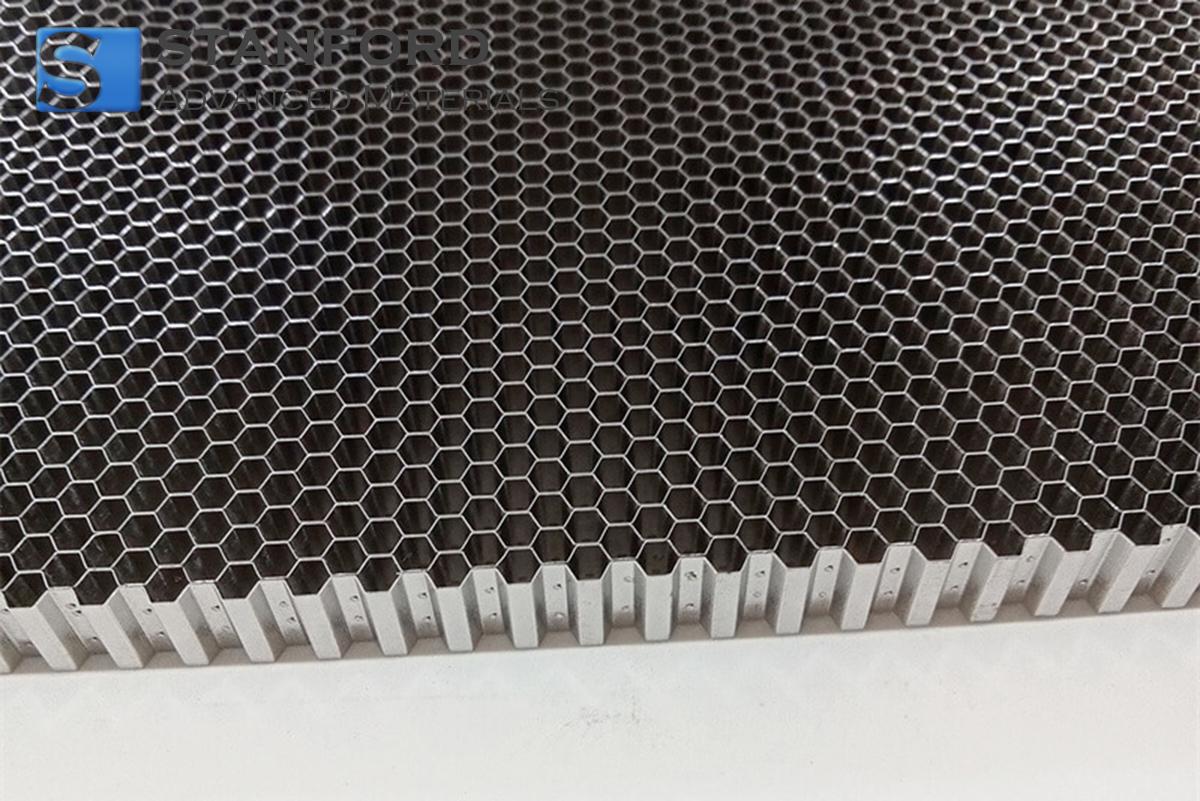
Our manufacturing process was adapted to produce a honeycomb core with the specified cell size of 5 mm, maintaining a tight tolerance of ±0.05 mm. We optimised the machining parameters and quality inspection techniques using precision CNC equipment. In addition, the cell wall thickness was maintained within a strict range of 0.2 mm ± 0.02 mm, ensuring a perfect balance between weight savings and mechanical stability.
Optimised Bonding Surface Preparation:
Recognising the need for a strong bond with the sandwich panel's face sheets, we refined our surface treatment process. Each core panel was mechanically enhanced to create an ideal surface profile, facilitating superior bonding during lamination. We additionally verified that the surface roughness profile supported the adhesive layering process while remaining within a maximum roughness of 0.8 µm.
Robust Packaging and Delivery:
Addressing the real-world constraint of strict lead times, we ensured that each honeycomb core panel was vacuum-sealed and packaged in moisture-resistant materials. This controlled packaging not only helped prevent oxidation during transport but also minimised the risk of physical damage so that the panels arrived in pristine condition ready for immediate integration into the aerospace panels.
End-to-End Collaboration:
From initial consultation to prototype delivery, our team maintained continuous dialogue with the aerospace manufacturer. Detailed engineering drawings were reviewed collaboratively, and adjustments were made to the cell configuration and bonding solutions to align with test data and practical assembly constraints.
Our solution thus combined rigorous quality control, precise machining, and strategic logistics management – all of which ensured that the final product fulfilled both the design intent and the safety certification requirements.
Results & Impact
Following the implementation of our custom stainless steel honeycomb core, the aerospace customer observed a marked improvement in both structural performance and production efficiency. Key outcomes included:
· The sandwich panels achieved uniform cell structures and consistent energy absorption, contributing to enhanced vibration-damping characteristics as verified during dynamic impact tests.
· Dimensional accuracy within the honeycomb core was consistently maintained, leading to fewer adjustments during panel assembly. This dimensional stability contributed to a noticeable reduction in rework cycles during final panel testing.
· The optimised bonding surface yielded improved adhesive performance, evidenced by the panels' superior response under cyclic load conditions where delamination risks were markedly reduced.
· Our efficient manufacturing and packaging process allowed the product to be delivered well within the compressed deadlines, thus keeping the overall project schedule intact.
These verifiable improvements not only met the stringent aerospace standards but also offered the customer the reliability needed for critical flight certification tests. Although further iterations remain planned for even more demanding configurations, the shift to our custom solution provided the necessary confidence to progress into the next phase of structural testing.
Key Takeaways
Our work on the custom stainless steel honeycomb core reinforces several important points for advanced aerospace applications:
· Precision in cell dimension and structural integrity is critical. Achieving cell sizes of 5 mm within ±0.05 mm tolerance significantly influences overall panel performance.
· Detailed material control—such as ensuring a purity level of 99.8% and maintaining consistent grain structure—can have a direct impact on the durability and energy absorption characteristics of the finished panels.
· Optimising the bonding interface, including surface treatments and adhesive compatibility, is essential to prevent issues like delamination, which can compromise structural safety.
· Efficient project management and production logistics, including robust packaging methods, must be coupled with advanced manufacturing techniques to meet the strict lead times inherent in aerospace projects.
· Continuous and constructive communication between the supplier and customer is crucial in refining both design and manufacturing processes to achieve the desired reliability and performance.
Working with Stanford Advanced Materials (SAM) on this project demonstrated not only our ability to provide tailored solutions but also our commitment to technical excellence in the face of challenging industrial requirements. The collaboration underlined the importance of integrating precise engineering, rigorous quality assurance, and efficient logistics to support advanced aerospace manufacturing processes.
In conclusion, our custom stainless steel honeycomb core successfully addressed critical aerospace challenges and has paved the way for enhanced manufacturing consistency and structural performance in future panel designs.
 Dr. Samuel R. Matthews
