

 Products
 Bars
Bars
 Beads & Spheres
 Bolts & Nuts
 Crucibles
 Discs
Discs
 Fibers & Fabrics
 Films
Films
 Flake
Flake
 Foams
Foams
 Foil
Foil
 Granules
 Honeycombs
 Ink
Ink
 Laminate
 Lumps
Lumps
 Meshes
 Metallised Film
 Plate
Plate
 Powders
 Rod
Rod
 Sheets
 Single Crystals
 Sputtering Target
 Tubes
Tubes
 Washer
 Wires
Wires
 Converters & Calculators
 Write for Us



High-Purity Tellurium Powder for Reliable CdTe Photovoltaic Absorber Layer Manufacturing in the Solar Energy Industry

Customer Background
A prominent solar energy manufacturer in South America required a stable and high-quality supply of tellurium powder to support the production of CdTe photovoltaic absorber layers. The company, with a long history in solar cell manufacturing, had built a reputation on performance and reliability. Their production process for CdTe modules depended heavily on raw materials with exacting specifications.
Operating in a market where even minor inconsistencies can cause significant production issues, the manufacturer had refined their processes over the years to achieve optimal efficiency. However, the quality of the tellurium powder emerged as a recurring point of concern. Their previous supplier delivered materials with variation in purity and particle size distribution, leading to challenges in absorber layer uniformity and the potential for electrical instability.
Challenge
The production process for CdTe photovoltaic modules is highly sensitive to the properties of the absorber layer. The key challenges that the manufacturer faced were:
· Ensuring tellurium purity consistently exceeded 99.99% to avoid impurity-related defects.
· Maintaining a strict particle size distribution, targeting a narrow range around 5 µm with tolerances of ±0.5 µm. This precision was needed to ensure proper sintering and layer formation.
· Achieving reliable compatibility between the tellurium powder and other semiconductor materials used in the module fabrication process.
Previous batches had shown an inconsistent particle size distribution, with occasional larger agglomerates that interfered with the sintering process. Moreover, even slight deviations in purity could result in non-uniform electrical properties within the CdTe absorber layer. The customer also faced logistic constraints—specifically, a tight production schedule meant that any delays in raw material delivery would disrupt their entire supply chain.
Why They Chose SAM
After evaluating several suppliers, the manufacturer turned to Stanford Advanced Materials (SAM) for several reasons. Our team at Stanford Advanced Materials (SAM) has over 30 years of experience in providing high-quality advanced materials across a global supply chain. The decision was driven by several factors:
· Our expertise in handling semiconductor-grade materials enabled us to understand the critical properties affecting photovoltaic performance.
· We offered tailored material solutions that ensured both the high purity required (exceeding 99.99%) and a narrowly controlled particle size range.
· SAM's commitment to customised services and the ability to meet tight production deadlines ensured that our proposed approach would integrate smoothly into the customer's workflow.
Our thorough review of the customer's requirements was supported by insights into both material behaviour and processing challenges, which reassured the manufacturer that we could deliver a product meeting their rigorous standards.
Solution Provided
At SAM, we developed a solution focused on addressing the specific technical and logistical challenges the manufacturer faced. Our approach consisted of several key technical measures:
1. We selected high-purity tellurium feedstock and refined it to achieve a purity greater than 99.99%. The processing steps included multiple purification cycles to remove residual contaminants that could impact the performance of CdTe absorber layers.
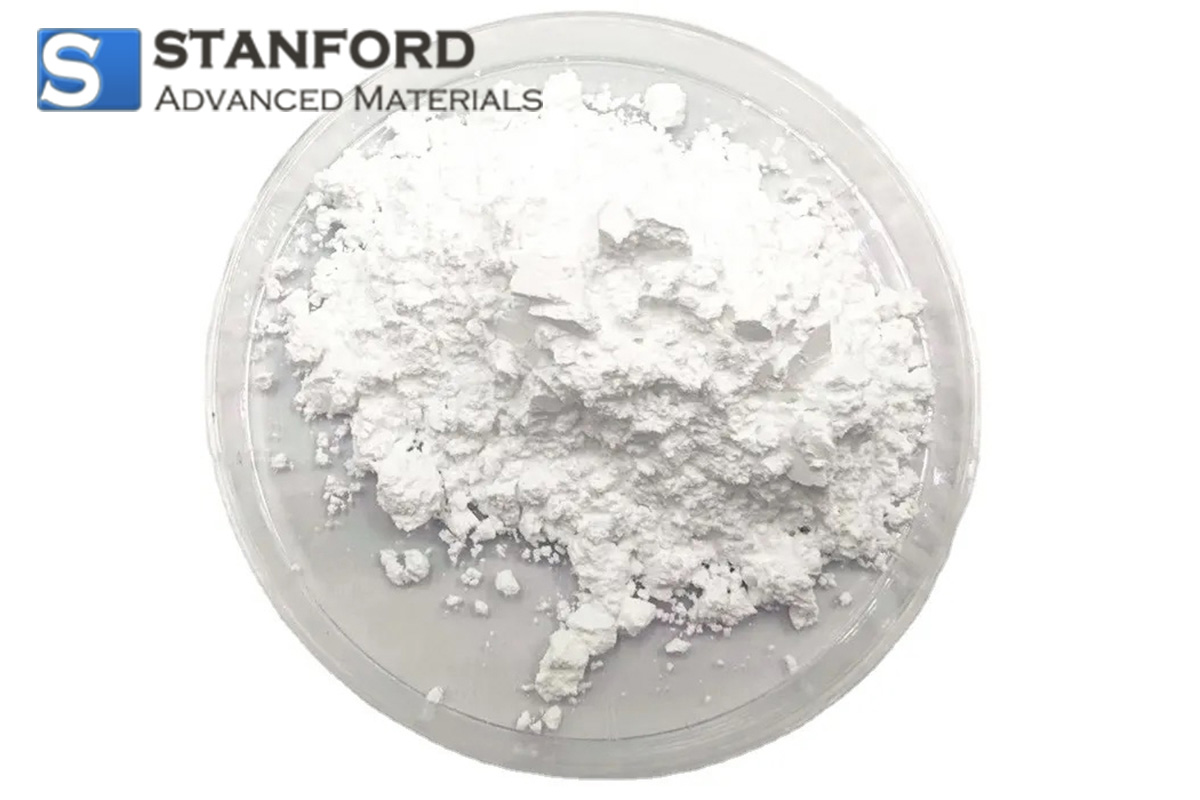
2. To meet the critical particle size distribution requirement, we implemented advanced milling techniques coupled with precise classification methods. The resulting powder exhibited an average particle size of 5 µm with a narrow tolerance of ±0.5 µm. This precision was crucial for ensuring consistent sintering behaviour during absorber layer formation.
3. Recognising the importance of process stability, we developed a customised packaging solution to avoid particle agglomeration during storage and transport. The tellurium powder was vacuum-sealed and shipped in moisture-controlled containers, which minimised oxidation and preserved the powder's reactivity profile.
Apart from addressing the technical specifications, we also optimised our production schedule to meet the customer's stringent delivery deadlines. Our global supply chain network ensured that materials were dispatched on time without compromising quality. By maintaining a rigorous quality control process throughout production and packaging, we guaranteed that the delivered material consistently met the design parameters required for CdTe layer fabrication.
Results & Impact
Once the customer incorporated our tellurium powder into their manufacturing process, they reported clear improvements in several areas:
· The enhanced purity (exceeding 99.99%) of the tellurium powder resulted in fewer defect sites within the CdTe absorber layers. This translated into better layer uniformity and reduced electrical variability in their modules.
· The consistent particle size distribution facilitated a repeatable sintering process, with the narrow tolerance minimising the formation of structural weak spots. As a result, the absorber layers exhibited more reliable performance under operational conditions.
· Our tailored packaging solution ensured that the material maintained its quality during transit and storage, effectively addressing the issue of premature oxidation and particle agglomeration.
One noted improvement was a measurable increase in conversion efficiency for the final photovoltaic modules. Additionally, by eliminating process delays associated with raw material inconsistencies, the manufacturer was able to adhere closely to their production timelines. While minor adjustments in their fabs were still necessary, material-related disruptions were significantly reduced.
Key Takeaways
Several critical lessons emerged from this collaboration:
· Precise control of material properties, such as purity and particle size, is essential for producing consistent CdTe photovoltaic absorber layers. Subtle deviations can substantially influence the final performance and reliability of solar cells.
· Addressing packaging and transport conditions is as vital as meeting intrinsic material specifications. Preventing contamination and agglomeration ensures that the benefits of rigorous processing are not lost before the material is put into use.
· Collaboration with a supplier that possesses both technical depth and a responsive global supply chain can mitigate production risks associated with raw materials. The ability to accommodate urgent production schedules without compromising quality is crucial in the competitive solar energy industry.
Our experience working on this project reinforced our commitment to technical excellence and customer-focused customisation. The cooperation between our engineering teams and the manufacturer enabled us to refine the tellurium powder properties in a way that directly benefited their production process. As a result, the solar energy manufacturer was able to deliver more consistent and efficient photovoltaic modules, contributing to overall enhanced performance and market competitiveness.
 Dr. Samuel R. Matthews
