

 Products
 Bars
Bars
 Beads & Spheres
 Bolts & Nuts
 Crucibles
 Discs
Discs
 Fibers & Fabrics
 Films
Films
 Flake
Flake
 Foams
Foams
 Foil
Foil
 Granules
 Honeycombs
 Ink
Ink
 Laminate
 Lumps
Lumps
 Meshes
 Metallised Film
 Plate
Plate
 Powders
 Rod
Rod
 Sheets
 Single Crystals
 Sputtering Target
 Tubes
Tubes
 Washer
 Wires
Wires
 Converters & Calculators
 Write for Us



Optimised CFC Plate Processing for Structural Carbon Composite Components in UK Industrial Manufacturing

Customer Background
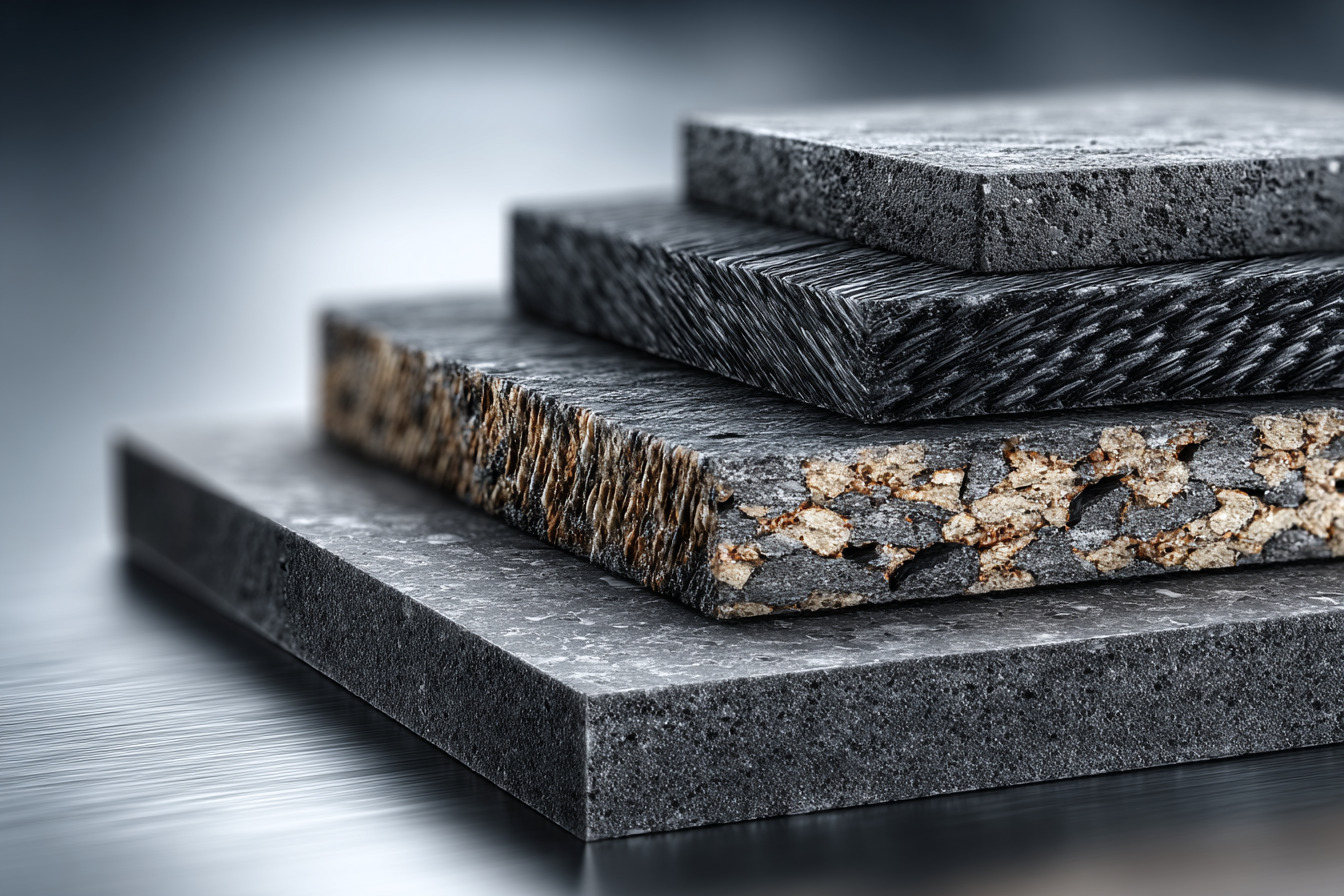
A prominent manufacturing firm based in the United States, operating in the industrial manufacturing sector, requires specialised carbon composite components for high-temperature and lightweight applications. Their production line centres on using CFC (carbon fibre composite) plates for structural components that must meet rigorous performance standards. The company had a long-established record of using conventional sheet processing methods to fabricate these parts but was now evaluating the benefits of both cutting and sheet processing to optimise bulk production cost and efficiency.
Their internal R&D team had developed several prototypes for high-temperature applications, but the production environment demanded greater consistency and controlled dimensional tolerances. With production volumes increasing, the manufacturer recognised the need for a material supplier who not only delivered bulk volumes but also offered tailored services and technical input. They turned to Stanford Advanced Materials (SAM) for guidance and support in reconfiguring their process strategy.
Challenge
The core challenge involved deciding between cutting versus sheet processing methods for CFC plates while ensuring performance consistency under high thermal loads. The manufacturer faced several technical and operational constraints:
• Achieving a carbon composite plate with a minimum carbon fibre volume fraction of 60% embedded in a high-temperature resistant resin, ensuring a stable structure at temperatures exceeding 400°C.
• Maintaining dimensional accuracy with an overall thickness tolerance of ±0.1 mm over large sheet sizes, necessary to preserve fit and assembly integrity in final structural designs.
• Implementing a bonding process that reinforced plate edges using a ceramic-based bond material to prevent delamination during cyclic thermal stress.
Previously, deviations in plate thickness and improper bonding at the sheet edges led to inconsistencies in component performance. In addition, the manufacturer had a tight lead time constraint due to an upcoming production run; any delay in material delivery or design iteration could disrupt the overall production schedule.
Why They Chose SAM
The manufacturer decided to collaborate with Stanford Advanced Materials (SAM) after evaluating multiple suppliers. SAM's hands-on approach, capable of analysing specific production challenges and providing detailed technical feedback, stood out. During initial discussions, our team emphasised several factors that resonated with the customer:
• Our capacity to work with high-purity composite grades and control parameters such as resin viscosity and carbon fibre alignment ensured that the end product would meet strict thermal and mechanical stability criteria.
• We proactively reviewed the customer's process diagrams and offered insights regarding cutting geometries versus sheet processing benefits, which helped streamline their cost optimisation goals.
• SAM demonstrated flexibility and responsiveness by highlighting potential issues, such as thermal load impacts during cutting operations and the need for reinforced edge bonding, which the customer had not fully considered.
This in-depth technical dialogue reassured the manufacturer that SAM could meet both their quality standards and lead time requirements.
Solution Provided
Our team at SAM developed a tailored approach for the production of CFC plates that addressed the client's specific needs:
• We specified a composite formulation with a carbon fibre volume fraction exceeding 60% and employed a resin system with a recommended curing profile to ensure stability at high temperatures. This formulation was backed by a quality certification ensuring resin consistency within a 2% variance.
• The manufacturing process was optimised to achieve a cutting method that maintained a thickness tolerance within ±0.1 mm, ensuring compatibility with the client's final assembly requirements. Each plate's surface was finished to a roughness below 1 micron to minimise friction in subsequent machining and bonding steps.
• To mitigate delamination, especially at high temperature extremes, we integrated a ceramic-based edge bonding protocol. This involved applying a thin film coating to the plate periphery designed to improve both thermal distribution and mechanical rigidity without compromising overall weight.
• Recognising the production schedule constraints, our team coordinated expedited batch testing and quality assurance cycles. Our lead time was managed within a 15-day window from final design confirmation to delivery, reducing the risk of production delays.
Results & Impact
The customised CFC plates produced by SAM provided several measurable improvements. Dimensional consistency and surface quality were maintained within the specified tolerances, which directly contributed to the reliable performance of the high-temperature components. The reinforced edge bonding reduced the incidence of delamination under cyclic thermal loading, ensuring that structural integrity remained intact over extended use.
Cost optimisation was achieved by switching from traditional sheet processing to a refined cutting process, resulting in lower scrap rates and more efficient material use. Production runs experienced fewer stoppages due to rework related to material inconsistencies, thereby improving overall throughput without sacrificing performance criteria.
Key Takeaways
This case highlights the importance of aligning material specifications, processing methodologies, and technical expertise to meet demanding industrial applications. A few key observations include:
• Defining precise material parameters—from carbon fibre volume and resin curing profiles to surface finish and bonding techniques—was critical in achieving consistent quality in high-temperature environments.
• Engaging a supplier like SAM, capable of detailed process analysis and flexible customisation, can significantly reduce production variability and lead time issues.
• Evaluating the trade-offs between cutting versus sheet processing based on measurable outcomes, rather than traditional practices, can drive both cost and performance improvements.
Our approach underscored the value of collaborative engineering in solving complex production challenges and optimising manufacturing processes for advanced industrial applications.
 Dr. Samuel R. Matthews
