{{flagHref}}
Products
  • Products
  • Categories
  • Blog
  • Podcast
  • Application
  • Document
|
|
/ {{languageFlag}}
Select language
Stanford Advanced Materials {{item.label}}
Stanford Advanced Materials
Select language
Stanford Advanced Materials {{item.label}}
Please start talking

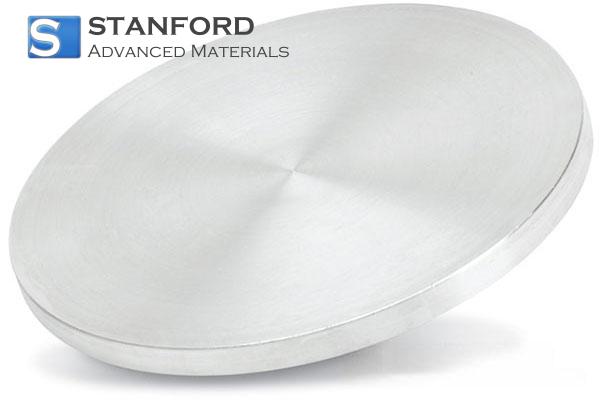
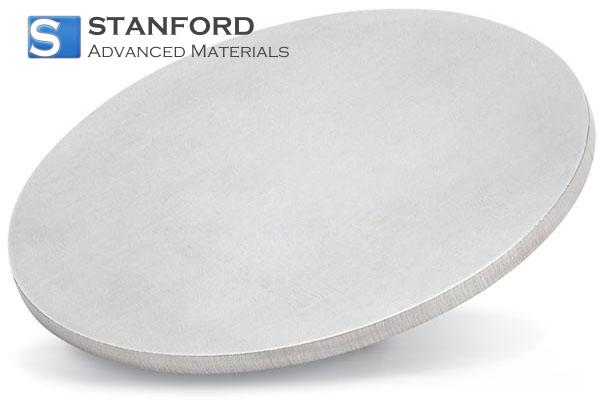
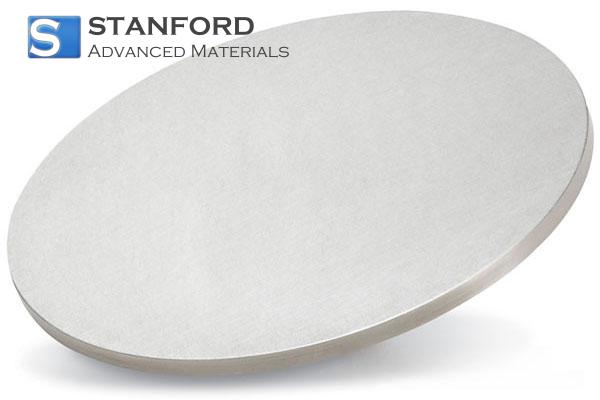
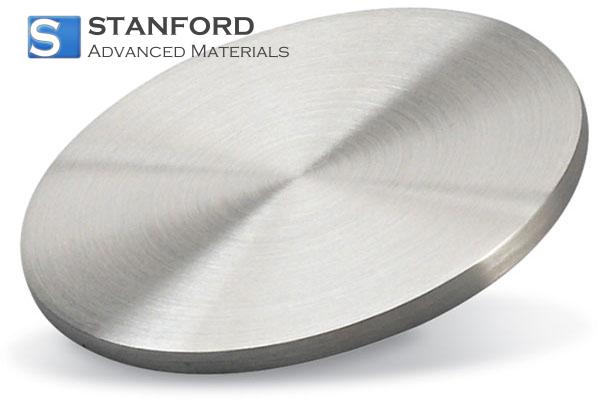
ST0895 Cobalt Iron Boron Sputtering Target, Co/Fe/B

Catalogue Number ST0895
Composition Co-Fe-B Alloy (Co:Fe:B = 40:40:20 at% standard; other ratios available)
Purity ≥99% (99.9% / 99.95% available)
Shape Discs, or Custom-made
Synonyms Cobalt Iron Boron Sputtering Target, CoFeB Target, CoFeB Alloy Target, Magnetic Sputtering Target

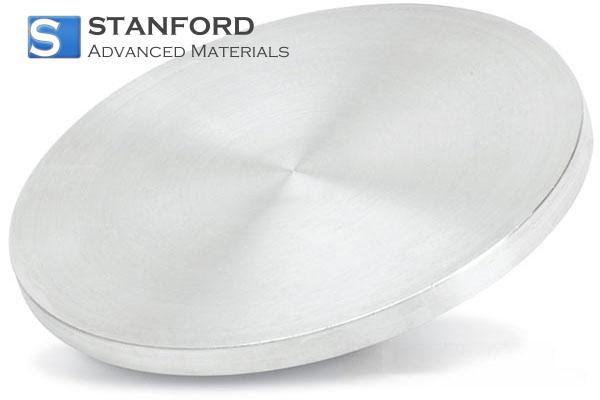
Cobalt Iron Boron (CoFeB) sputtering targets from Stanford Advanced Materials. CoFeB is a soft magnetic alloy widely used for magnetic tunnel junction (MTJ) fabrication in STT-MRAM, magnetic sensors, and spintronic devices. Standard composition: Co:Fe:B = 40:40:20 at% (melting point ~1,250°C, density ~8.8 g/cm³). Other ratios available (60:20:20, 20:60:20, etc.). Standard discs from 2" to 6", or custom sizes. Indium bonding available.

Related Products: Cobalt (Co) Sputtering Target | Iron (Fe) Sputtering Target | Boron (B) Sputtering Target | Magnesium Oxide (MgO) Sputtering Target

INQUIRY
Add to Compare
Description
Specification
Reviews

FAQ

Vacuum-sealed to prevent oxidation. Custom packaging available for bulk orders.

Co:Fe:B = 40:40:20 at% is the most common composition for STT-MRAM and MTJ devices. This ratio provides optimal spin polarisation, low damping, and high TMR after annealing. Other ratios (60:20:20, 20:60:20) are available for specific applications.

Why is CoFeB used in MRAM?

CoFeB offers three key properties: high spin polarisation (~70%) for high TMR, low magnetic damping for fast switching, and amorphous as-deposited structure that enables high-quality MgO tunnel barrier interface after annealing.

Do I need to anneal CoFeB films after deposition?

Yes, typically annealing at 300-400°C is required to crystallise CoFeB and achieve high TMR. The B segregates to the MgO interface, which enhances spin filtering.

What sputtering method should I use?

CoFeB is conductive, so direct current sputtering works effectively. For reactive processes or to minimise arcing, pulsed direct current or radio frequency can also be employed.

Do CoFeB targets need bonding?

Yes, bonding is recommended. CoFeB alloy may become brittle depending on composition, and bonding to a copper backing plate enhances thermal management and reduces the risk of cracking.

Is CoFeB target magnetic?

Yes, CoFeB is ferromagnetic. Handle with care near sensitive equipment. The target itself is magnetic but can be sputtered in standard magnetron systems.

What purity do I need for MRAM applications?

99.9% (3N) is typical for most MRAM and MTJ research. 99.95% (3N5) is recommended for production and advanced applications where trace impurities can affect device performance.

REQUEST A QUOTE

Send us an inquiry today to learn more and receive the latest pricing. Thank you!

* Your Name
* Your Email
* Product Name
* Your Phone
* Country

United Kingdom

    Purity

    99.9%

    • 99.9%
    • 99.5%
    • 99.99%
    • 99.999%
    • Other
    Diameter

    2''

    • 2''
    • 3''
    • 4''
    • 5''
    • 6''
    • Other
    Thickness

    0.25''

    • 0.25''
    • 0.125''
    • All
    • Other
    Bonding

    Yes

    • Yes
    • No
    • Other
    Comments
    I would like to join the mailing list to receive updates from Stanford Advanced Materials.
    Please enclose drawings:

    Save files here or

    * Check Code
    Accepted file types: PDF, png, jpg, jpeg. Upload multiple files at once; each file must be under 2MB.
    Leave A Message
    Leave A Message
    * Your Name:
    * Your Email:
    * Product Name:
    * Your Phone:
    * Comments: