

 Products
 Bars
Bars
 Beads & Spheres
 Bolts & Nuts
 Crucibles
 Discs
Discs
 Fibers & Fabrics
 Films
Films
 Flake
Flake
 Foams
Foams
 Foil
Foil
 Granules
 Honeycombs
 Ink
Ink
 Laminate
 Lumps
Lumps
 Meshes
 Metallised Film
 Plate
Plate
 Powders
 Rod
Rod
 Sheets
 Single Crystals
 Sputtering Target
 Tubes
Tubes
 Washer
 Wires
Wires
 Converters & Calculators
 Write for Us



Advanced CuSnS Sputtering Target for Precise Thin Film Deposition in Photovoltaic Research

Customer Background
A research team from the Asia-Pacific region, active in the renewable energy sector, was developing advanced photovoltaic absorber layers using chalcogenide materials. Their work centred on the thin film deposition of copper tin sulfide (CuSnS) as a promising photovoltaic material. The team had a thorough understanding of the critical role that uniform target composition and precise material geometry play in achieving consistent film properties.
Past experiments revealed that variations in target material properties could lead to deposition instability, affecting the uniformity and optical performance of the thin film absorber layers. The customer had previously worked with standard targets, but the evolving experimental needs demanded a non-standard target featuring customised physical dimensions, bonding configurations, and surface finish. With a tight testing schedule dictated by instrumentation and limited beam time for deposition, the project required an expedited response without compromising technical accuracy.

Challenge
The primary challenge was to supply a sputtering target that maintained high material integrity throughout long deposition cycles. Specific technical requirements included:
• A target composition of CuSnS with a purity level maintained at 99.9% to ensure repeatable optical and electronic properties in the resulting film.
• Dimensional specifications with a tolerance of ±0.05 mm for thickness uniformity, ensuring that targets fit precisely with the deposition chamber's clamping mechanism.
• Two bonding options: a monolithic target and a copper-backed configuration. The latter required a precisely engineered bonding interface with an interfacial thickness control within 0.1 mm to manage thermal gradients during sputtering.
Previous suppliers had delivered targets that occasionally exhibited inconsistent sputtering behaviour, including localised heating and early onset of instability during high-power operation. This variability not only affected film thickness uniformity but also introduced potential degradation of the absorber's performance. Moreover, the research team was working under constrained lead times—delays in material delivery could bottleneck subsequent testing phases and impact the overall project timeline.
Why They Chose SAM
The research team reviewed several material suppliers and ultimately selected Stanford Advanced Materials (SAM) based on our extensive track record and ability to address specific technical challenges. At the initial consultation, our team provided detailed engineering feedback regarding the target's bonding integrity and thermal management issues. We raised pertinent considerations, such as:
• The impact of thermal load during high-power sputtering and its effect on the copper-backed target's bonding interface.
• The importance of consistent edge geometry to allow maximum utilisation of the target surface during sputtering.
• The need for customised packaging procedures to prevent surface oxidation, which is critical for chalcogenide materials.
Our proactive approach demonstrated our commitment to precision and reliability, traits that resonated with the customer's demand for a tailored solution.
Solution Provided
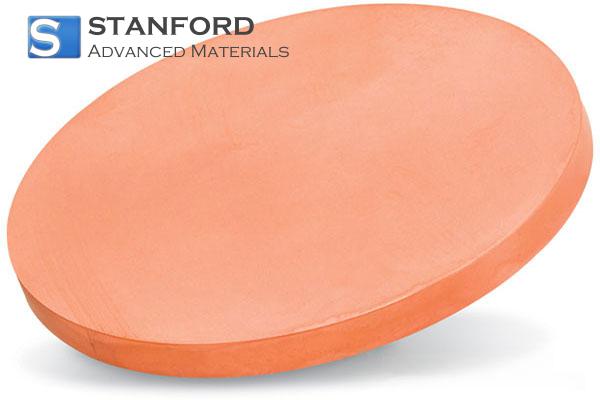
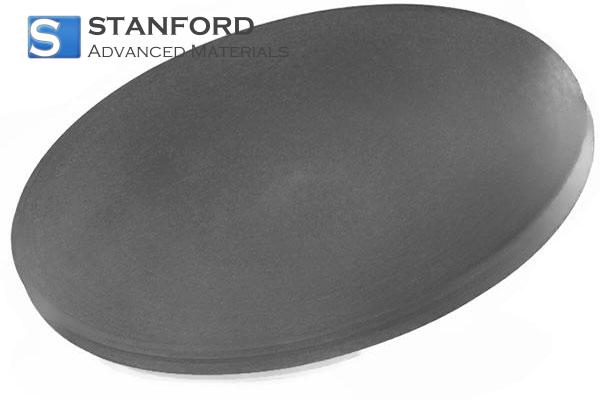
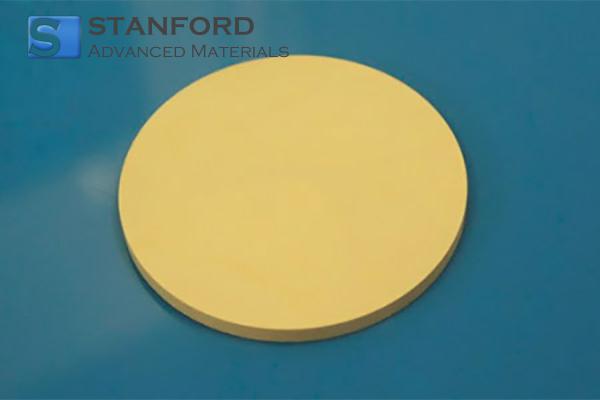
Stanford Advanced Materials (SAM) developed a customised CuSnS sputtering target designed to meet the stringent requirements of thin film deposition for photovoltaic absorber layers. Specific technical measures included:
• Material Purity and Composition: The CuSnS alloy was processed to achieve a minimum purity of 99.9%. Process controls were implemented to monitor the alloy's composition consistently over multiple production runs, ensuring that trace impurities remained below detectable levels.
• Dimensional Accuracy: We machined the target to a thickness of 15 mm ± 0.05 mm, ensuring compatibility with the existing clamping system. The surface flatness was maintained to within 0.03 mm across the entire target area, reducing deposition irregularities.
• Bonding and Thermal Treatment: Two options were produced—a monolithic target and a copper-backed target. For the copper-backed configuration, we applied a bonding layer with an interfacial tolerance controlled within 0.1 mm. This design minimised differential thermal expansion and improved heat dissipation during prolonged sputtering cycles.
• Packaging and Handling: Recognising the sensitivity of chalcogenide materials to oxidation, the targets were vacuum-sealed using a nitrogen-purged process and shock-protected packaging was implemented to prevent mechanical stress during transit.
Our engineering team collaborated closely with the customer to confirm that the design met operational demands and that lead times could be maintained. The production schedule was adjusted to deliver initial samples within the narrow testing window, ensuring that the customer could integrate the targets into their deposition experiments without significant delay.
Results & Impact
Testing of the tailored CuSnS target showed measurable improvements in thin film deposition performance. The controlled purity and precise machining resulted in a reduction of film thickness variation to less than 4% across multiple deposition cycles. In contrast to previous materials, the new target maintained a stable sputtering rate over extended high-power operation, indicating effective thermal management in the copper-backed version.
The customisable bonding options provided the opportunity for direct comparison between monolithic and copper-backed configurations. Ultimately, the copper-backed target exhibited enhanced thermal dissipation during rapid cycling, leading to more uniform film properties. These improvements meant that the research team could focus on further refining the absorber layer process parameters with greater confidence in the consistency of the material supply.
Key Takeaways
This case highlights several critical factors in achieving effective thin film deposition for photovoltaic absorbers:
• Material purity, precise dimensional tolerances, and controlled bonding interfaces are essential for producing substrates that yield repeatable thin film properties.
• The ability to tailor target configurations helps address specific thermal management and deposition challenges, critical for high-intensity sputtering applications.
• Working with a supplier experienced in addressing highly specific criteria ensures that production lead times are met without compromising the technical integrity of the material.
The collaborative approach taken by both the research team and our engineering staff at Stanford Advanced Materials (SAM) underscores the importance of detailed technical assessment and customisation in addressing complex material challenges.
 Dr. Samuel R. Matthews
