

 Products
 Bars
Bars
 Beads & Spheres
 Bolts & Nuts
 Crucibles
 Discs
Discs
 Fibers & Fabrics
 Films
Films
 Flake
Flake
 Foams
Foams
 Foil
Foil
 Granules
 Honeycombs
 Ink
Ink
 Laminate
 Lumps
Lumps
 Meshes
 Metallised Film
 Plate
Plate
 Powders
 Rod
Rod
 Sheets
 Single Crystals
 Sputtering Target
 Tubes
Tubes
 Washer
 Wires
Wires
 Converters & Calculators
 Write for Us



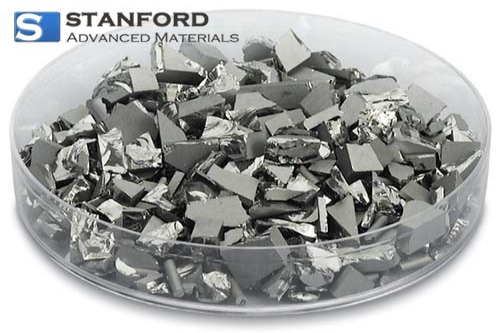
Calcium Sputtering Target for Controlled Thin Film Deposition in Semiconductor Process Development

Customer Background
A leading UK-based corporate entity in the semiconductor sector required a specialised calcium sputtering target for their advanced thin film deposition processes. The customer, operating under a stringent production timeline, had a history of material inconsistencies that contributed to challenges in maintaining uniform calcium layers. With a portfolio demanding precision and reproducibility, they turned to Stanford Advanced Materials (SAM) for our technical expertise and customisation capabilities.
The customer's process involved depositing very thin calcium layers in highly controlled environments for process development in semiconductor production. Their legacy materials struggled with issues such as inconsistent deposition rates and variable film thickness, which impeded further scaling of their process. Given the budgetary expectations and rigorous quality control protocols of the industry, it was imperative to source a target that provided high purity, meticulous machining specifications, and enhanced thermal support for prolonged deposition cycles.

Challenge
The primary challenge was to ensure the deposition process produced predictable, repeatable results in calcium film uniformity. Specific technical difficulties included:
• A required calcium purity of 99.90% or higher to minimise impurities that could compromise film properties.
• Target geometry needed to be machined within a tolerance of ±0.05 mm to align perfectly with the deposition system's clamping and thermal requirements.
• The design had to consider thermal management during the sputtering process, especially since fluctuations in substrate temperature had previously led to film irregularities.
• The elevated production speed meant that our customer's lead time was extremely constrained, demanding not only precision manufacturing but rapid delivery.
Prior attempts from former suppliers were hampered by slight variances in the target dimensions and bonding configuration, which led to instability in the deposition process. The necessity for rapid adjustment in process parameters, along with the instability introduced by design-related thermal gradients, placed a premium on both the consistency of the target material and the speed of delivery.
Why They Chose SAM
The decision to work with Stanford Advanced Materials (SAM) was based on a combination of our technical depth and flexibility in addressing client-specific challenges. Early communications revealed our thorough inquiry into the deposition system's thermal profiles, substrate cooling requirements, and the mechanical loads imposed by the sputtering setup. Our team provided detailed feedback on:
• The impact of target purity on film consistency.
• The need for customisation in machining—that is, achieving a target flatness and edge geometry that minimised material loss during high-speed deposition.
• The benefits and drawbacks of different bonding configurations designed to enhance heat conduction.
Our approach went beyond simply offering a standard product; SAM reviewed the production environment and provided insightful recommendations regarding optimal bonding techniques and packaging procedures. These observations helped refine the customer's process requirements and instilled confidence in our ability comprehensively to support controlled thin film depositions under stimulated production conditions.
Solution Provided
At SAM, we undertook the production of a tailored calcium sputtering target designed to meet the semiconductor industry's stringent performance needs. The customised solution included the following technical specifics:
• Calcium purity was maintained at 99.92%, ensuring that the raw material adhered closely to the required specification and reduced the risk of introducing impurities that could alter film properties.
• The target dimensions were machined with a tolerance of ±0.05 mm, ensuring consistency across the deposition surface and compatibility with the precision clamping system of the customer's sputtering apparatus.
• We provided a bonded backing configuration—integrating a high-conductivity copper support underneath the calcium target—to manage the thermal load during high-speed deposition. This copper backing was designed with an interlayer thickness that balanced conduction with adhesion, reducing the potential for delamination under cyclic heating.
• The target was further engineered to include micro-machined edge profiles aimed at preventing localised erosion, which had been a problem in previous production runs.
• Packaging was executed with precision controls in a controlled atmosphere to reduce oxidation. The target was sealed in vacuum packaging to ensure that the sensitive calcium surface did not deteriorate during transit, a critical factor considering the short lead time requirements.
This level of technical detail ensured that the target not only met the deposition system's geometric and thermal specifications but also addressed previous issues related to target degradation and film variability.
Results & Impact
The deployment of the customised calcium sputtering target resulted in significant improvements to the semiconductor process development. Some of the key outcomes included:
• A marked reduction in film thickness variability across deposition cycles. The consistent target dimensions and enhanced thermal bonding allowed for a reproducible deposition rate.
• Enhanced thermal management was observed during prolonged sputtering runs. The copper-backed design moderated the target's temperature fluctuations, reducing thermal stress and subsequent film irregularities.
• The high-purity calcium target contributed to fewer byproducts, ensuring that the resulting thin films maintained electrical and structural integrity, which is critical for semiconductor applications.
• Operational reliability improved noticeably, as the vacuum packaging guaranteed that the target material remained free of oxidation until implemented in the sputtering system.
• The project adhered to a challenging lead time without compromising on the bespoke quality measures that the process demanded.
While the customers continued to fine-tune their deposition parameters, the material-related challenges were significantly mitigated. This allowed the engineering teams to focus on process refinement and scaling up the operation with increased confidence in material performance.
Key Takeaways
The case underscores the importance of precise material specifications in semiconductor process development. Attention to purity, dimensional tolerances, and thermal management within the calcium sputtering target made a material difference in film consistency and thermal stability.
Key observations:
• Rigorous attention to machining tolerances minimises misalignment issues during deposition.
• Incorporating a bonded backing layer can effectively address thermal management challenges in high-speed sputtering environments.
• Protective packaging under controlled conditions is critical for preventing pre-use degradation, especially when material purity is a non-negotiable factor.
• Collaborative technical feedback during the design stage is essential for reworking process requirements and mitigating production risks.
Through this detailed approach, our solution provided not only a reliable material supply but a pathway to enhance the overall process stability in semiconductor manufacturing. The expertise demonstrated by our team at SAM, combined with our commitment to precision engineering over a constrained lead time, underscores our role as a dependable partner in advancing semiconductor process development.

 Dr. Samuel R. Matthews
