

 Products
 Bars
Bars
 Beads & Spheres
 Bolts & Nuts
 Crucibles
 Discs
Discs
 Fibers & Fabrics
 Films
Films
 Flake
Flake
 Foams
Foams
 Foil
Foil
 Granules
 Honeycombs
 Ink
Ink
 Laminate
 Lumps
Lumps
 Meshes
 Metallised Film
 Plate
Plate
 Powders
 Rod
Rod
 Sheets
 Single Crystals
 Sputtering Target
 Tubes
Tubes
 Washer
 Wires
Wires
 Converters & Calculators
 Write for Us



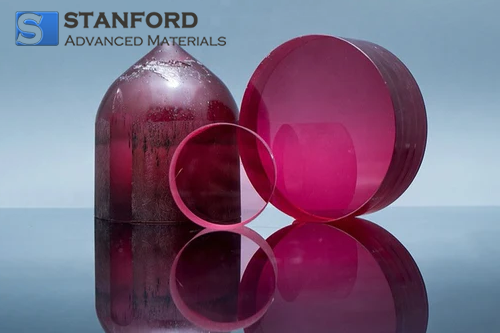
Custom Cu-Doped Sapphire & YAG Crystals for Decorative Gemstone and Optical Applications in the United Kingdom Jewellery Industr

Customer Background
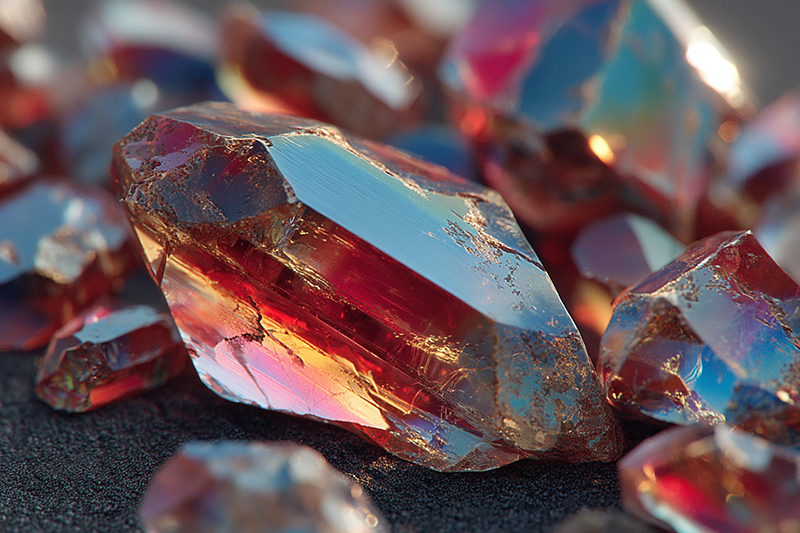
A UK-based jewellery manufacturer, known for its high-quality decorative gemstones and optical materials, was advancing its product range with custom-doped sapphire and YAG boules. The company's product strategy focused on uniqueness and consistency for both decorative pieces and specialised optical applications. Their in-house designs relied on using tailored Cu-doped crystals that not only enhanced aesthetic appeal but also improved light transmission properties in high-end jewellery.
Their previous sourcing solution provided standard boules that did not meet the specific doping or dimensional requirements for new product lines. With a reputation for quality, they required not just a consistent appearance, but also tight control over crystal properties such as purity, uniform dopant distribution, and precise crystallographic orientations to ensure a measurable impact on light refraction and overall optical performance.
Challenge
The manufacturer faced multiple challenges in achieving the desired crystal quality and consistency. Their requirements included:
- A doping concentration resulting in uniform coloration and enhanced optical transmission, with a variability of less than ±0.2 wt.%.
- Boule dimensions that needed a diameter control within ±0.05 mm, critical for subsequent cutting and faceting.
- Maintaining high purity levels (99.99% or higher) to reduce internal defects, which could affect both durability and light behaviour when used in high-end jewellery applications.
- A rapid turnaround time: a lead time constraint that demanded complete material verification and timely delivery to align with product launch schedules.
Previously, off-the-shelf solutions and slight variations in the doping process led to inconsistent gemstone appearances, impacting both aesthetic qualities and functional performance in optical applications. In addition, minor deviations in the boule dimensions led to increased wastage during cutting, resulting in higher production costs and decreased overall efficiency.
Why They Chose SAM
The manufacturer reached out to Stanford Advanced Materials (SAM) after evaluating several suppliers based on detailed technical queries. In initial discussions, our team provided technical insights into the impact of dopant uniformity on crystal optics and raised questions about the thermal management during boule growth. This advice was instrumental in refining their process specifications.
Our emphasis on customised service, supported by over 30 years of experience in advanced materials, resonated with the customer. We provided a clear outline regarding:
- The precise bonding procedures to ensure optimal thermal distribution during crystal growth.
- The controlled chemical vapour deposition environment to control impurities.
- Rigorous post-growth testing protocols to ensure each boule met the required dimensional and compositional tolerances.
This technical depth and willingness to adapt early designs to meet operational constraints made a strong impression, positioning SAM as a knowledgeable and reliable partner to meet the customer's stringent production standards.
Solution Provided
SAM worked closely with the manufacturer to develop custom Cu-doped sapphire and YAG boules. Our process involved several critical technical steps:
1. We selected high-purity starting materials, ensuring a base metal purity of 99.99%. This step was crucial in preventing micro-defects that could affect both the decorative and optical properties of the final product.
2. The doping process was optimised using a controlled thermal gradient method. This method provided a uniform Cu-dopant distribution, maintaining the concentration within ±0.2 wt.% across the entire boule. We also monitored the crystallisation rate to limit the formation of any unwanted secondary phases.
3. Precise dimensional control was a priority. We engineered the growth process so that boule diameters stayed within ±0.05 mm tolerance. Special attention was given to the interface bonding between the doped zone and the host crystal, mitigating potential cracking or delamination during processing.
4. Packaging and transport were carefully handled. Each boule was vacuum-sealed in inert packaging to avoid any oxidation or surface contamination, ensuring the material arrived in perfect condition for further processing by the manufacturer.
5. Given the tight schedule, our production line was adjusted for a high-priority run. We coordinated internal reviews and expedited quality control tests to meet the manufacturer's short lead time requirement without compromising on technical specifications.
These steps provided a crystal growth solution that was tailored to the customer's need for both high visual quality and predictable optical behaviour.
Results & Impact
The customised Cu-doped sapphire and YAG boules produced by SAM met the demanding specifications set out by the manufacturer. Key measurable improvements included:
- Uniform dopant distribution ensured consistent coloration and optimal light transmission properties across each gemstone.
- Dimensional precision allowed for reduced material scrap during the faceting process, enhancing overall production efficiency.
- The high purity of the crystals significantly lowered the incidence of internal defects, supporting both longevity and performance in decorative as well as light-manipulating applications.
Furthermore, the expedited production cycle aligned with the manufacturer's critical launch timetable. Although initial production required adjustments, the final outcome led to improved yield rates and a reduction in wastage. These measurable improvements directly influenced the quality of the final product and provided a solid foundation for subsequent optical designs.
Key Takeaways
The collaboration highlights several lessons crucial for advanced materials applications:
- Detailed attention to dopant concentration and crystal purity plays an essential role in ensuring both aesthetic appeal and functional performance, particularly in applications where light transmission is critical.
- Tight dimensional tolerances and controlled bonding interfaces are not just production metrics; they are critical factors that directly influence material behaviour during subsequent operations, such as cutting and faceting.
- A supplier with both the technical expertise and the flexibility to address stringent production timelines adds significant value during the development and roll-out of specialised manufacturing processes.
Through a combination of technical precision and responsive service, Stanford Advanced Materials (SAM) provided a solution that met the dual demands of decorative quality and optical performance in the high-stakes jewellery industry. This case underscores the importance of aligning material science with practical manufacturing requirements to achieve consistent, high-performance results.

 Dr. Samuel R. Matthews
