

 Products
 Bars
Bars
 Beads & Spheres
 Bolts & Nuts
 Crucibles
 Discs
Discs
 Fibers & Fabrics
 Films
Films
 Flake
Flake
 Foams
Foams
 Foil
Foil
 Granules
 Honeycombs
 Ink
Ink
 Laminate
 Lumps
Lumps
 Meshes
 Metallised Film
 Plate
Plate
 Powders
 Rod
Rod
 Sheets
 Single Crystals
 Sputtering Target
 Tubes
Tubes
 Washer
 Wires
Wires
 Converters & Calculators
 Write for Us



Custom Niobium Sputtering Targets for Superconducting Coatings in Advanced Research Applications

Customer Background
A prominent research group at a respected technical university in Poland specializes in developing superconducting coatings for use in vacuum electronic components. Their laboratory focuses on the deposition of high-purity niobium films using DC sputtering, a technique where even minor deviations in material properties can significantly influence film consistency and superconducting performance.
Historically, the research team had managed preliminary sputtering experiments with standard targets. However, recurring inconsistencies in the film deposition process, especially during extended sputtering runs, led them to re-evaluate their material components. With an existing deposition system calibrated for strict geometric and mechanical tolerances, the institution required sputtering targets that not only complied with rigorous purity specifications but also offered customization in bonding configurations. The dual configuration options—monoblock and copper-backed bonded targets—were critical for assessing heat dissipation and sputtering uniformity under diverse experimental conditions.

Challenge
The main challenge centred on achieving repeatable performance during DC sputtering while accommodating the research group's tight tolerance specifications. The key requirements were:
· Niobium purity of at least 99.95% to minimize impurities that could lower superconducting properties.
· A target thickness maintained precisely at 10 mm, with a tolerance of ±0.1 mm to ensure uniform energy distribution during sputtering.
· The option for multiple configurations: a monoblock version providing structural integrity and a copper-backed bonded version designed to enhance heat dissipation.
· Compatibility with the existing clamping system critical for maintaining target stability during long deposition cycles.
In previous projects using commercially available targets, the team encountered issues such as drift in deposition rate and inconsistent film thickness. These irregularities were partly due to insufficient thermal management and bonding weaknesses that led to variable sputtering performance. Additionally, the research schedule placed strict constraints on lead time. Any delay in material delivery risked disrupting a planned series of experiments aligned with their annual funding and publication timelines.
Why They Chose SAM
After reviewing several potential suppliers, the team selected Stanford Advanced Materials (SAM) for its extensive 30+ years of industry experience and its proven ability to customize advanced materials. The decision was supported by several factors:
· Our team at Stanford Advanced Materials (SAM) conducted a comprehensive assessment of the provided engineering drawings and technical requirements, offering insightful feedback on target geometry and bonding implications.
· The detailed consultation highlighted SAM's capacity to tailor the target design to the specific demands of DC sputtering, including measured responses to thermal loads and mechanical stresses.
· Flexibility in providing two distinct target configurations under uniform material specifications allowed the customer to conduct head-to-head trials, thereby reducing risks associated with performance variability.
· Our history of supplying over 10,000 global customers with a diverse portfolio of advanced materials instilled confidence that we could meet their stringent deadlines without compromising on quality or consistency.
Solution Provided
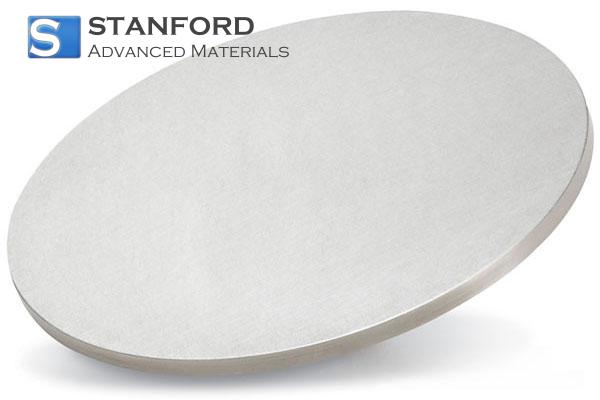
SAM addressed the challenges by delivering custom niobium sputtering targets engineered specifically to enhance the stability and repeatability of the DC sputtering process. Key technical details of the supplied solution included:
· Material Purity and Specification: We provided niobium with a verified purity of 99.95%, ensuring minimal impurity interference during superconducting film formation. The grain structure of the niobium was carefully controlled to mitigate variability under high thermal loads.
· Dimensional Precision and Tolerance: Each target was machined to deliver a uniform thickness of 10 mm ± 0.1 mm, with flatness maintained within strict tolerances to secure robust contact with the deposition system's clamping mechanism. This precision reduced interface-related energy variations during sputtering.
· Custom Bonding Configurations: Two configurations were produced. The monoblock target served as a baseline for performance comparison. Concurrently, the copper-backed bonded target was developed to enhance thermal conductivity. The bonding interface was optimized to ensure reliable adhesion even after repeated heating cycles. Special attention was paid to the bonding layer thickness and uniformity, engineering a controlled interface that minimized the risk of separation during extensive sputtering operations.
· Packaging and Delivery Considerations: Recognising the risk of surface oxidation and mechanical damage, all targets were vacuum-sealed and shock-protected during packaging. This extra layer of care ensured that the targets maintained their high-quality surface finish and dimensional accuracy upon arrival.
· Lead Time and Process Alignment: Our production process was calibrated to meet the customer's tight lead time requirements, ensuring expedited delivery without compromising on the necessary quality checks or material certifications.
Results & Impact
The deployment of SAM's custom niobium sputtering targets demonstrated several measurable improvements in the research group's DC sputtering setup. Key outcomes included:
· A significant reduction in film thickness variability across multiple sputtering cycles—the precision in target dimensions and controlled bonding directly contributed to reduced rate drifts.
· The copper-backed targets delivered enhanced thermal management, where improved heat dissipation led to uniform sputtering conditions, particularly beneficial during extended deposition runs.
· The research setup transitioned from frequent process adjustments to a more predictable and repeatable output, allowing scientists to focus on refining other experimental parameters rather than compensating for material inconsistencies.
· Overall system stability improved such that the comparative analysis between the monoblock and bonded targets provided clear insights into long-term performance, paving the way for subsequent optimization of deposition protocols.
While the adjustments did not completely eliminate the need for minor process fine-tuning, the material-related variables were effectively managed. The improved consistency in sputtering performance allowed for more reliable comparisons and bolstered the credibility of subsequent research findings.
Key Takeaways
Selecting the right material supplier involves a detailed examination of both product specifications and process requirements. In this case, the successful outcome hinged on several critical insights:
· Precision in material purity and dimensional tolerance is essential for applications where even slight deviations can affect superconducting film performance.
· Having the flexibility to choose between different bonding configurations provides a practical advantage during experimental validation, allowing researchers to quantitatively assess the trade-offs between structural integrity and thermal management.
· Robust packaging and adherence to strict manufacturing tolerances are crucial in ensuring that high-quality targets arrive without degradation, especially under tight lead time constraints.
· Collaborative consultation, where suppliers actively engage with research teams over design nuances, can significantly reduce risks associated with process variability and experimental delays.
Our experience at Stanford Advanced Materials (SAM) highlights that attention to these technical details, combined with a strong commitment to customization and quality, can lead to substantial advancements in DC sputtering processes for superconducting coatings. The technical data and measured improvements in this case study serve as a practical reference point for similar advanced materials needs in high-performance research environments.

 Dr. Samuel R. Matthews
