

 Products
 Bars
Bars
 Beads & Spheres
 Bolts & Nuts
 Crucibles
 Discs
Discs
 Fibers & Fabrics
 Films
Films
 Flake
Flake
 Foams
Foams
 Foil
Foil
 Granules
 Honeycombs
 Ink
Ink
 Laminate
 Lumps
Lumps
 Meshes
 Metallised Film
 Plate
Plate
 Powders
 Rod
Rod
 Sheets
 Single Crystals
 Sputtering Target
 Tubes
Tubes
 Washer
 Wires
Wires
 Converters & Calculators
 Write for Us



Optimised SAPO-34 Molecular Sieve for Enhanced Gas Separation and Catalytic Efficiency in Chemical Research

Customer Background
A research organisation based in Switzerland was conducting advanced studies focused on gas separation and catalytic reactions. Their work centred on optimising gas-phase reactions and adsorption processes essential for sustainable chemical production. The facility had previously used off-the-shelf catalyst and adsorption materials, but experimental variations and process instabilities raised concerns regarding precision when scaling experimental setups. With ongoing projects requiring rigorous control of pore size distribution and material purity, the team sought a product that would reliably support both separation efficiency and reaction kinetics under controlled laboratory conditions.
Challenge
The primary challenge lay in procuring a SAPO-34 molecular sieve that matched the demanding requirements of chemical reaction research. Specifically, the material needed to:
• Exhibit a purity level consistently above 99.8% to ensure minimal interference during catalytic reactions.
• Maintain pore apertures centred around 3.8 angstroms with a tolerance below ±0.1 Å, critical for selective gas adsorption.
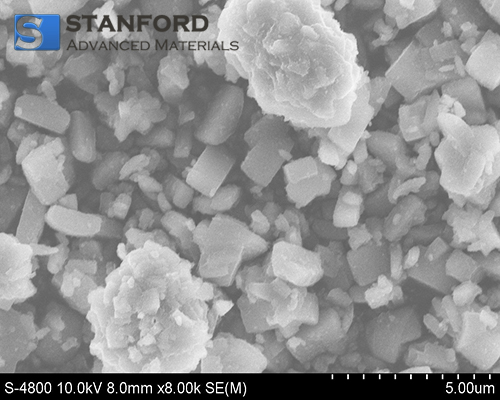
• Feature narrowly distributed crystallite sizes averaging 15 micrometers (±2 micrometers) to ensure uniform catalyst activity.
In previous experiments, variations in material properties led to inconsistent adsorption rates and fluctuations in reaction efficiency. This inconsistency introduced additional variables during testing, adversely affecting data repeatability and scale-up applicability. Exacerbating the challenge was the tight project timeline; the lead time needed to be minimal, and the material had to be fully compatible with the existing reactor and separation setups to avoid further delays or modifications.
Why They Chose SAM
The research team turned to Stanford Advanced Materials (SAM) after evaluating multiple suppliers. Our team's extensive background in advanced materials ensured a deep understanding of the intricate material properties required for chemical catalysis and gas separation. Key factors for their selection included:
• Our proven track record in customising materials to meet exact technical specifications.
• The ability to offer detailed engineering support—from verifying pore size distribution to optimising crystallite dimensions.
• Flexibility in production scheduling ensured the material was delivered within the project's tight timeline.
Our proactive approach in discussing the specific constraints, such as temperature tolerance under reaction conditions and the need for stable adsorption behaviour, immediately resonated with the customer's technical team.
Solution Provided
At Stanford Advanced Materials (SAM), we leveraged decades of experience to develop a SAPO-34 molecular sieve that directly addressed the researchers' technical requisites. The customised solution featured:
• A purity standard of 99.8%+, achieved through controlled synthesis and rigorous quality checks, reducing unwanted catalytic side reactions.
• Precisely calibrated pore apertures set at approximately 3.8 angstroms with a deviation of less than ±0.1 Å. This tight control of pore dimensions ensured an optimal balance between adsorption specificity and throughput.
• Crystallite sizes maintained at an average of 15 micrometers with a narrow distribution (±2 micrometers). This uniformity was critical to achieving consistent reaction kinetics and reproducible separation rates.
In addition to these technical specifics, we performed thorough compatibility analyses with the research laboratory's reactor systems. Our engineers worked closely with the client to review detailed process parameters, accommodating constraints such as thermal stability up to 600°C and resistance to pressure fluctuations common in gas separation applications. Packaging also received careful attention; each batch was sealed in an inert atmosphere to mitigate oxidation and preserve material integrity during shipment, ensuring that the SAPO-34 remained stable from production to installation.
Results & Impact
Post-implementation, the research team reported measurable improvements in both gas separation efficiency and catalytic reaction consistency. The uniformity in pore size and crystallite dimensions yielded a reduction in variability across test runs. In particular:
• Improved selectivity in gas adsorption was observed, which led to enhanced reaction rates with lower energy consumption.
• The consistent material properties allowed for easier calibration of reaction parameters, resulting in more reliable scaling from the laboratory to pilot applications.
• The synthesis method also reduced the frequency of material reprocessing, saving valuable experimental time and resources.
While some process adjustments remained necessary on the customer's end, the dependable nature of the SAPO-34 allowed the team to focus on refining broader reaction parameters rather than troubleshooting material inconsistencies.
Key Takeaways
This case underscores the importance of tailoring material properties to match specific application needs. In environments where minute variations can significantly affect process outcomes, precise control over factors like purity, pore size, and crystallite distribution is critical. Our experience at Stanford Advanced Materials (SAM) confirms that close collaboration with customers and attention to technical details, including real-world constraints like tight lead times and compatibility issues, can markedly improve operational efficiency. For research groups engaged in gas separation and catalytic processes, ensuring high material consistency is a vital step towards reproducible success in chemical research applications.
.png)

 Dr. Samuel R. Matthews
