Products
 Bars
Bars
 Beads & Spheres
 Bolts & Nuts
 Crucibles
 Discs
Discs
 Fibers & Fabrics
 Films
Films
 Flake
Flake
 Foams
Foams
 Foil
Foil
 Granules
 Honeycombs
 Ink
Ink
 Laminate
 Lumps
Lumps
 Meshes
 Metallised Film
 Plate
Plate
 Powders
 Rod
Rod
 Sheets
 Single Crystals
 Sputtering Target
 Tubes
Tubes
 Washer
 Wires
Wires
 Converters & Calculators
 Write for Us



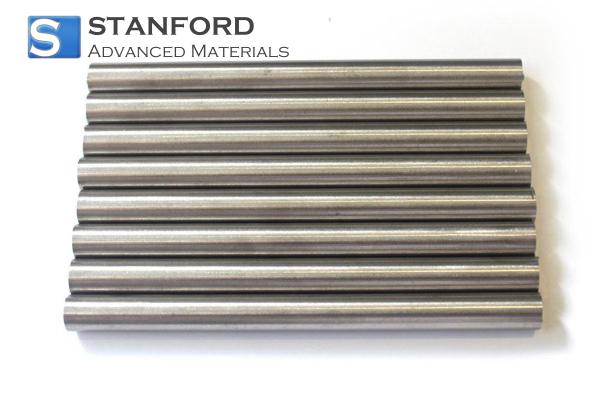
Precision-Machined Tungsten Rods for High-Temperature Furnace Components and EDM Electrodes in German Industrial Applications

Customer Background
A long-standing customer based in Germany operates within the heavy industrial manufacturing sector. His company specialises in producing components for high-temperature furnaces and precision electrical discharge machining (EDM) electrodes. With decades of experience serving markets that require robust and reliable materials, the customer needed tungsten rods that could consistently withstand extreme thermal conditions and severe mechanical stresses during EDM operations.
Operating in environments where even slight deviations in component dimensions can lead to significant process disruptions, the team demanded a solution that combined both material integrity and exact machining specifications. His previous suppliers could not meet the tight tolerance requirements nor the custom dimensions necessary for his high-performance applications, prompting him to seek a partner with established expertise and a track record of delivering consistent quality.
Challenge
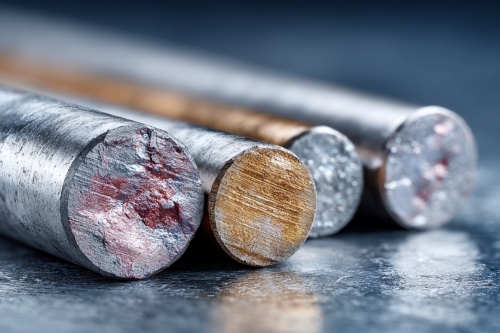
The core requirement was to produce tungsten rods with custom sizes that ensured high precision and durability for two critical applications:
1. High-Temperature Furnaces: In this context, tungsten rods are subjected to prolonged exposure to extreme temperatures. The primary challenge was to maintain material integrity and mechanical stability under thermal stress.
2. EDM Electrodes: For EDM machining, precise electrode geometry directly affects machining accuracy and cycle time. The rods had to meet exact diametric tolerances to ensure reliable electrical discharge and consistent machining performance.
Key technical challenges included:
- Achieving a tungsten purity of at least 99.95% to guarantee minimal impurities that might compromise performance under high thermal loads.
- Maintaining a precision diameter, with machining tolerances specified to ±0.005 mm, to ensure that the rods fit precisely within the assembly or electrode clamping systems.
- Meeting stringent surface finish requirements to minimise micro-irregularities, which could lead to erratic electrode wear or degradation of the EDM process.
- Ensuring that the material properties were consistent throughout the rod, addressing potential issues of internal stress or microstructural inconsistencies that could emerge during thermal cycling.
Additional constraints involved tight lead times, as the manufacturing process had to align with the customer's production schedule. Any delay in material delivery could result in significant downtime in high-temperature furnace operations or interrupt the EDM machining process.
Why They Chose SAM
This engineering team chose Stanford Advanced Materials (SAM) for several critical reasons. From our initial discussions, we provided a detailed review of the technical drawings and specifications, offering feedback on several key factors that could affect both furnace performance and EDM outcomes.
First, we addressed the specific requirements for tungsten rod purity and dimensional tolerances. Our team's ability to work closely with his design documents, pinpointing potential issues related to thermal expansion and electrode geometry, set us apart. Our experience in managing customised requests and our historical reliability in high-precision machining reassured the customer that the solution would meet or exceed his expectations.
Moreover, our capacity to guarantee timely delivery without compromising quality was a decisive factor. SAM's established global supply chain and quality control protocols ensured that even under tight deadlines, the products would comply with both industry standards and the customer's custom requirements. This was especially important given the sensitivity of EDM operations and high-temperature furnace components, where deviations could disrupt production significantly.
Solution Provided
Our team at Stanford Advanced Materials (SAM) provided a tailored solution addressing the multifaceted requirements through the following measures:
1. Material Selection: We utilised tungsten with a purity of no less than 99.95%, ensuring structural integrity at high temperatures and during EDM operations. The selected tungsten material was carefully inspected to confirm homogeneity and to eliminate potential microstructural anomalies.
2. Custom Machining: The rods were precision-machined to the custom dimensions provided by the customer. We maintained a dimensional tolerance of ±0.005 mm across the critical diameter and ensured that the rod length adhered to the specified design requirements. Such precision was necessary to avoid issues during assembly in furnace setups and to ensure consistent performance as EDM electrodes.
3. Surface Finish and Tolerance Control: Our manufacturing process incorporated advanced machining techniques to achieve a high-quality surface finish, reducing the risk of electrode wear or improper seating in clamping systems. The machining protocol included monitoring of the surface roughness to ensure it met the required technical standards for both high-temperature stability and electrical performance.
4. Packaging and Delivery Considerations: The tungsten rods were vacuum-sealed and packaged in moisture-controlled conditions to prevent any surface oxidation. Given the real-world challenge of adhering to tight production schedules, we accelerated the shipping process to align with the client's demanding timeline, ensuring on-time delivery without compromising the product's integrity.
These steps ensured that the final product met every technical criterion necessary for success. Special care was taken to ensure that the rods would perform reliably under the stresses of both thermal cycling in high-temperature furnaces and the rapid electrical discharges characteristic of EDM processes.
Results & Impact
Subsequent tests and operational feedback confirmed that the refined tungsten rods delivered by SAM achieved the intended performance improvements. In the high-temperature furnace applications, the thermal stability of the tungsten rods was maintained even under extended exposure to high operating temperatures, reducing unexpected downtime and maintenance events. For EDM electrodes, the precision in diameter and surface finish contributed to more consistent machining cycles, with the electrodes maintaining steady performance over extended use.
The success of this tailored solution minimised variation in component behaviour, which, in turn, improved overall process consistency. The precise tolerances and uniform material properties ensured that the team's equipment operated within the desired parameters, helping to maintain production throughput and operational efficiency.
Key Takeaways
This case underscores the importance of tailored material engineering in meeting both precision and durability requirements within demanding industrial applications. Engaging closely with technical documentation and addressing specific challenges—such as maintaining tungsten purity at 99.95%, ensuring diametric precision within ±0.005 mm, and guaranteeing a high-quality surface finish—proved essential in delivering results that met strict operational criteria.
The project demonstrated that detailed understanding of material properties and manufacturing constraints is crucial for components subjected to extreme conditions, such as high-temperature furnaces and EDM processes. It also emphasised the value of a collaborative approach between the supplier and customer, where engineering expertise drives improvements in product performance and reliability.
In conclusion, by focusing on the technical specifics and operational constraints, we at SAM were able to provide a solution that not only met the customer's immediate needs but also contributed to long-term process stability in challenging industrial environments.
 Dr. Samuel R. Matthews