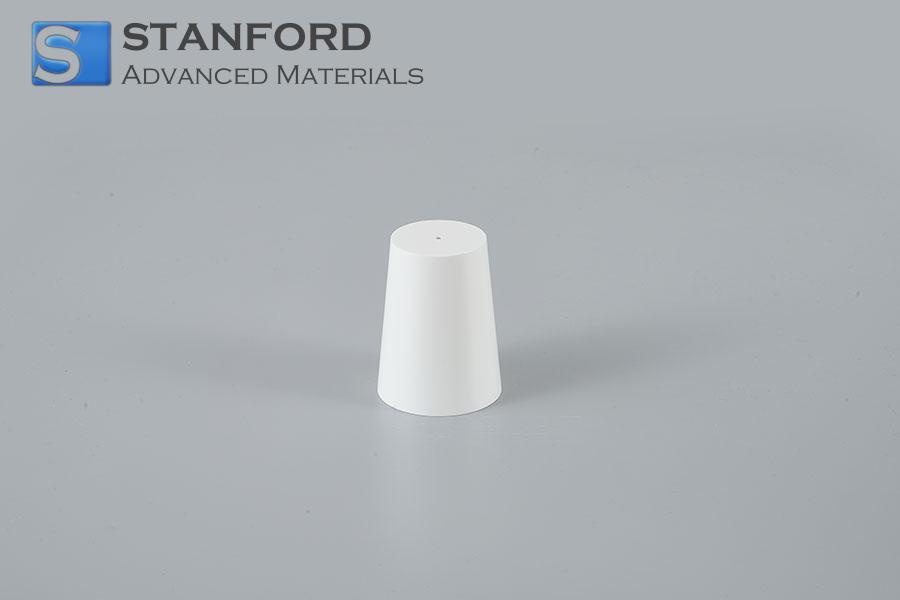
Description of Alumina Boats
Our alumina boats are manufactured from high-purity aluminium oxide (Al₂O₃), a technical ceramic renowned for its outstanding combination of properties critical for high-temperature applications.
These boats exhibit excellent thermal conductivity and compressive strength, allowing for efficient heat transfer and structural integrity under load. Their exceptional thermal shock resistance enables rapid heating and cooling cycles without cracking—a vital feature in many laboratory and industrial processes. Combined with superior chemical stability and electrical insulation, alumina boats provide a reliable, inert container that prevents sample contamination and reaction with furnace elements.
This makes them indispensable across sectors: from laboratory thermal analysis (TGA/DSC) and CHN elemental analysis, to material science research, powder sintering, semiconductor wafer processing, and specialist roles in metallurgy and catalyst support.
Specifications for Alumina Boats
| Property |
Unit |
Al95 (95%) |
Al99 (99%) |
Al997 (99.7%) |
Notes |
| Al₂O₃ Content |
% |
95 |
99 |
99.7 |
|
| Colour |
|
White |
Ivory |
Ivory |
|
| Flexural Strength |
MPa |
~360 |
~380 |
~370 |
Typical, 3-point bend |
| Compressive Strength |
MPa |
~2070 |
~2600 |
~2410 |
|
| Density |
g/cm³ |
3.70 |
3.90 |
3.92 |
|
| Hardness |
HV |
1380 |
1720 |
1800 |
Vickers |
| Max. Working Temp. |
°C |
1500 |
1650 |
1750 |
In air |
| Thermal Conductivity |
W/(m·K) |
25 |
30 |
30 |
@ 20°C |
| Coeff. Thermal Expansion |
x10⁻⁶/K |
7.7 |
7.8 |
7.8 |
RT - 1000°C |
| Volume Resistivity |
Ω·cm |
>10¹⁴ |
>10¹⁴ |
>10¹⁴ |
@ 25°C |
Specifications are typical values. For application-specific validation or certified test reports, please contact our technical team.
How to Choose the Right Alumina Boat Purity?
For General Laboratory & Industrial Use (up to 1600°C):
95% Alumina (Al95) offers the best balance of performance and cost-effectiveness. Suitable for ashing, calcination, and general furnace work.
For Demanding High-Temperature & Critical Chemical Applications (up to 1750°C):
99% or 99.7% Alumina (Al99/Al997) is recommended. These grades provide superior resistance to reducing atmospheres, pure metals, and aggressive chemicals, with lower porosity and higher mechanical strength.
For Maximum Performance in Electrical Insulation & Wear Resistance:
99.7% Alumina (Al997) delivers the highest density, hardness, and purity, making it ideal for semiconductor handling and applications where minimal contamination is paramount.
Alumina Boat Types & Standard Sizes (Selection)
We supply a comprehensive range of standard sizes. All dimensions are in millimetres (mm). Custom designs and tolerances are available upon request.
1. Rectangular Alumina Boats

| Length (L) |
Width (W) |
Height (H) |
| 150 |
20 |
20 |
| 120 |
80 |
40 |
| 100 |
50 |
30 |
| 90 |
30 |
20 |
| 50 |
20 |
20 |
2. Oval-Bottom Alumina Boats

| Length (L) |
Width (W) |
Height (H) |
| 250 |
40 |
18 |
| 150 |
40 |
20 |
| 100 |
40 |
25 |
| 60 |
54 |
24 |
3. Classic High-Wall Alumina Boats

| Length (L) |
Width (W) |
Height (H) |
| 115 |
30 |
20 |
| 77 |
13 |
8 |
| 44 |
11 |
8 |
Need a size not listed? We specialise in custom fabrication. [Send us your drawing for a fast quote].
Primary Applications
-
Elemental (CHN) Analysis: Provides a clean, inert vessel for precise combustion analysis.
-
Thermal Analysis (TGA/DSC): Ideal for studying material decomposition, mass change, and phase transitions at high temperatures.
-
Laboratory Sample Preparation: Used for ashing, combusting, sintering, and heat-treating powders and solid samples.
-
Semiconductor & Electronics Processing: For wafer boats, diffusion processes, and component annealing where high purity is essential.
-
Metallurgy & Materials Research: As crucibles for melting trials, alloy studies, and high-temperature chemical reactions.
Alumina Boats Packaging
Our alumina boats are carefully handled to prevent damage during storage and transportation and to preserve the quality of our products in their original condition.

Specification
|
Composition
|
UNIT
|
Al95
|
Al99
|
Al997
|
|
Al2O3 Content
|
%
|
95
|
99
|
99.7
|
|
Colour
|
|
White
|
Ivory
|
Ivory
|
|
Tensile Strength
|
Kpsi
|
32
|
38
|
36
|
|
Flexural Strength
|
Kpsi
|
52
|
55
|
54
|
|
Compressive Strength
|
Kpsi
|
300
|
377
|
350
|
|
Density
|
g/cc
|
3.70
|
3.90
|
3.92
|
|
Hardness
|
HV, GPa
|
13.8
|
17.2
|
18
|
|
Thermal Conductivity
|
W/(m·K)
|
25
|
30
|
30
|
|
C.O.T.E.
|
In / In°C (x10^-6)
|
7.7
|
7.8
|
7.8
|
|
Working Temperature
|
°C
|
1500
|
1650
|
1750
|
|
Dielectric Constant
|
|
9.5
|
9.7
|
9.8
|
|
Volume Resistivity (25°C)
|
Ohm-cm
|
>10^14
|
>10^14
|
>10^14
|
*The product information provided above is based on theoretical data and is intended for reference only. Actual specifications may differ.
CUSTOMER REVIEWS
No reviews for current products.


 Products
 Bars
Bars
 Beads & Spheres
 Bolts & Nuts
 Crucibles
 Discs
Discs
 Fibers & Fabrics
 Films
Films
 Flake
Flake
 Foams
Foams
 Foil
Foil
 Granules
 Honeycombs
 Ink
Ink
 Laminate
 Lumps
Lumps
 Meshes
 Metallised Film
 Plate
Plate
 Powders
 Rod
Rod
 Sheets
 Single Crystals
 Sputtering Target
 Tubes
Tubes
 Washer
 Wires
Wires
 Converters & Calculators
 Write for Us