

 Products
 Bars
Bars
 Beads & Spheres
 Bolts & Nuts
 Crucibles
 Discs
Discs
 Fibers & Fabrics
 Films
Films
 Flake
Flake
 Foams
Foams
 Foil
Foil
 Granules
 Honeycombs
 Ink
Ink
 Laminate
 Lumps
Lumps
 Meshes
 Metallised Film
 Plate
Plate
 Powders
 Rod
Rod
 Sheets
 Single Crystals
 Sputtering Target
 Tubes
Tubes
 Washer
 Wires
Wires
 Converters & Calculators
 Write for Us



A Comparative Analysis of LCP and MPI for High-Frequency 5G Antenna Applications

1 Introduction
As a fundamental component of wireless communication, antenna technological innovation is a core driver of wireless connectivity. Concurrently, with the rapid development of intelligent terminal products towards thinner, lighter, and smaller form factors, mobile phone antennas have evolved from early external antennas to built-in antennas, resulting in a market landscape where soft board processes are dominant; soft board antennas now hold over 70% market share. This has led to a rapid expansion of the Flexible Printed Circuit (FPC) market. Current mainstream and emerging flexible circuit board substrate materials primarily focus on two materials: LCP and MPI, the latter being a material that enhances the disadvantages of traditional PI material to achieve superior properties. This article will dissect the comparative advantages and disadvantages of these two materials from the perspectives of signal transmission material requirements and the inherent structural properties of the materials themselves.

Fig. 1 Internal Flexible Circuit Board Structure of Smartphones
2 New Challenges for Antenna Materials Posed by 5G High-Frequency Signals
5G communication technology is the most rapidly developing information pathway technology today. 5G not only significantly enhances the performance of the Sub-6GHz band but also expands the use of millimetre-wave (mmWave) bands (e.g., 28GHz, 39GHz). These bands act as broad highways for data flow, offering very high transmission rates (theoretically up to 10 Gbps and above) and immense network capacity, capable of supporting advanced applications such as 4K/8K real-time video streaming, Augmented/Virtual Reality, and autonomous driving.
However, the extremely high transmission rates come with significant transmission losses. According to radio wave propagation principles, the higher the frequency, the greater the path loss and atmospheric absorption loss of the signal in space. This indicates mmWave signals do not "travel far," resulting in relatively limited coverage. Penetration is another significant challenge; mmWaves are largely ineffective at penetrating common obstacles like walls, glass, or even leaves, and their line-of-sight propagation characteristics require as unobstructed a connection as possible between transmitter and receiver.
These challenges directly impact the critical attribute of signal integrity. Any energy loss or signal distortion during transmission can lead to unstable connections, reduced speeds, and increased latency.
To meet the stringent demands of 5G high-frequency signal transmission, antenna substrate materials must achieve a comprehensive high standard of performance. A stable low dielectric constant and an extremely low dissipation factor are fundamental prerequisites, directly determining the efficiency and integrity of signal transmission by minimising energy loss at high frequencies. The material's flexibility and thinness/lightness are equally critical, enabling adaptation to the compact and irregular internal layouts of modern mobile terminals. In practical applications, high frequency stability is essential, ensuring consistent antenna performance across different operating frequency bands and temperature environments. Finally, the long-term reliability of all these performance aspects ultimately depends on the material's excellent moisture barrier properties; a very low moisture absorption rate effectively prevents the degradation of electrical performance due to ingress of environmental humidity. These four requirements are interrelated and collectively form the core evaluation criteria for 5G high-frequency antenna materials.

Fig. 2 5G Millimeter-Wave Signal Propagation
3 Introduction to LCP and MPI Materials
3.1 Definition and Properties of LCP
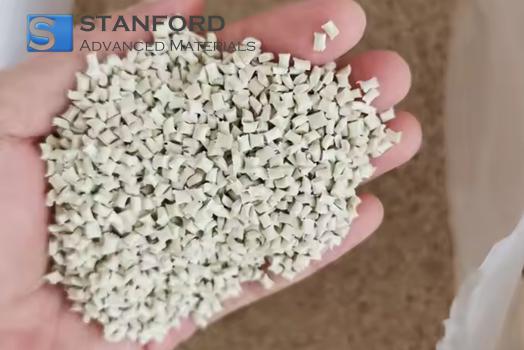
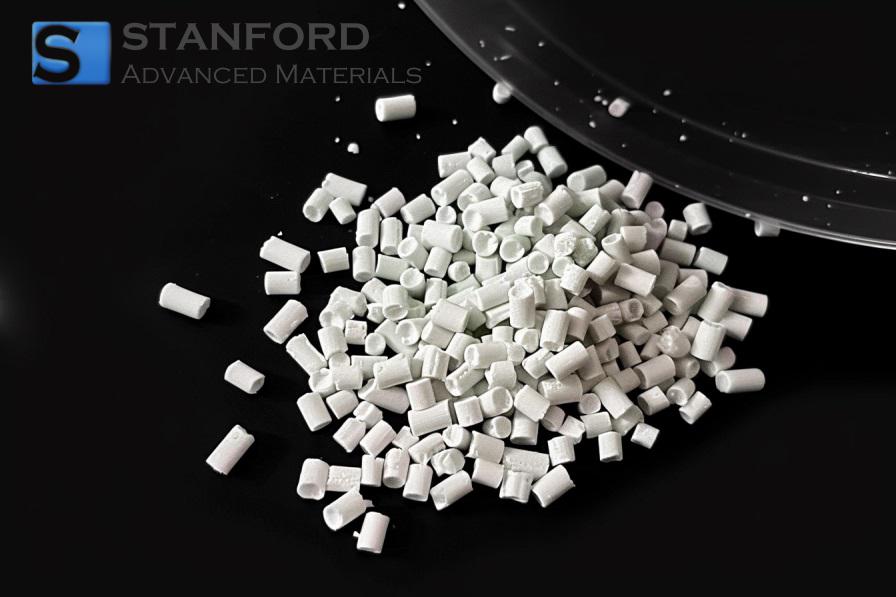
LCP plastic raw material (Liquid Crystal Polymer) is a novel high-performance polymer that exhibits liquid crystallinity in its molten state, classified into thermotropic (liquid crystal state induced by temperature change) and lyotropic (liquid crystal state formed by solvent action) types. This material features high strength, high rigidity, heat resistance (300-425°C), a low coefficient of thermal expansion, UL94 V-0 flame retardancy, and excellent dimensional stability, with a density of 1.35-1.45 g/cm^3. It can achieve high mechanical performance without fibre reinforcement.
LCP materials exhibit stable and very low dielectric constants and dissipation factors up to millimetre-wave frequencies, enabling them to minimise energy loss and phase distortion during signal transmission, ensuring excellent signal integrity at high frequencies. Simultaneously, LCP possesses an extremely low moisture absorption rate, with almost no absorption of ambient moisture. This characteristic fundamentally prevents the degradation of electrical performance due to moisture absorption, guaranteeing long-term reliability of antennas in complex environments. Furthermore, LCP offers excellent flexibility and mechanical strength, allowing it to be processed into ultra-thin flexible circuits, perfectly adapting to the compact and three-dimensional, irregular installation spaces inside terminal devices. Its good thermal stability and suitability for multi-layer lamination processes further support the high-density integration and stable manufacturing of complex antenna modules. It is the organic combination of this series of superior electrical properties, reliable physical characteristics, and suitable processability that establishes LCP's core position in the field of high-speed, high-frequency signal transmission.

Fig. 3 Liquid Crystal Polymer (LCP) Molecular Structure
3.2 MPI Introduction and Comparison with PI
Modified Polyimide (MPI), as a solution in the field of 5G antenna materials, is essentially a product optimised in chemical structure and formulation based on traditional Polyimide (PI). While traditional PI offers excellent heat resistance, mechanical strength, and flexibility, its inherently high dielectric constant and dissipation factor, particularly its performance instability at high frequencies and moisture absorption, limit its application above approximately 10 GHz. MPI was developed precisely to address these issues. By introducing specific functional groups or using novel monomers into the PI molecular chain, MPI significantly reduces the material's dielectric constant and dissipation factor, making it viable for use in 5G Sub-6GHz and some lower-frequency mmWave bands. At the same time, MPI retains the excellent flexibility, high mechanical strength, and mature processing ecosystem of traditional PI. This means existing production lines can be utilised for MPI flexible circuit boards without expensive modifications, thus providing a significant advantage in cost control and supply chain maturity. Therefore, MPI can be understood as an "upgraded version" of traditional PI in terms of electrical performance. It is not a revolutionary new material but rather an "evolutionary" material that achieves an optimal balance between performance and cost, becoming a competitive alternative against high-performance LCP, especially in the mainstream Sub-6GHz band during the initial mass commercialisation of 5G.

Fig. 4 Polyimide PI Chemical Structure
Table 1 MPI (Modified Polyimide) vs. PI (Polyimide) Characteristic Comparison Table
|
Property Dimension |
Traditional PI (Polyimide) |
MPI (Modified Polyimide) |
Comparative Analysis and Significance |
|
Electrical Performance |
Poor • High and unstable dielectric constant • High dissipation factor, significantly high-frequency loss |
Significantly Optimised • Lower and more stable dielectric constant • Greatly reduced dissipation factor |
Core improvement of MPI. Through chemical modification, MPI addresses the critical flaw of traditional PI's excessive loss at high frequencies, enabling its use in 5G Sub-6GHz and lower-frequency mmWave applications. |
|
Moisture Absorption |
High ~1%-3% moisture absorption |
Improved Reduced moisture absorption (~0.4%-1%) |
Key reliability enhancement. Moisture absorption deteriorates electrical performance. MPI's lower moisture absorption ensures more stable performance in humid environments, though still not comparable to LCP's ultimate moisture resistance. |
|
Flexibility / Mechanical Strength |
Excellent Outstanding flexibility, tear resistance, and durability |
Excellent Inherits the excellent physical and mechanical properties of PI |
Inherited advantages of MPI. Both are very reliable in terms of flexibility, suitable for manufacturing flexible circuits requiring dynamic bending. |
|
Process & Cost |
Mature & Low Cost Well-established industry chain, very mature processing technology |
Mature & Moderate Cost Fully compatible with existing PI production lines; cost slightly higher than PI but significantly lower than LCP |
MPI's market competitiveness. Manufacturers can produce without large-scale equipment replacement, making it a highly cost-effective solution for the transition from 4G to 5G. |
|
Heat Resistance |
Superior Very high glass transition and thermal decomposition temperatures, strong long-term operational reliability |
Excellent Retains most of the excellent heat resistance properties of PI |
Shared advantage. Both can withstand high-temperature soldering processes in electronic assembly, ensuring product durability. |
|
Primary Application Scenarios |
4G/LTE antennas, flexible circuit boards, high-temperature resistant electronic components |
5G Sub-6GHz antennas, some lower-frequency mmWave antennas, high-performance flexible circuits |
Clear market positioning. PI suits scenarios with low high-frequency performance requirements; MPI is precisely positioned for mainstream 5G mobile phone antennas, balancing performance and cost. |
4 Comprehensive Comparative Analysis of LCP and MPI
4.1 Electrical Performance
LCP demonstrates significant advantages in the millimetre-wave band, with its dielectric constant typically below 3.4 and a dissipation factor as low as 0.0025. This benefits from the high symmetry of the LCP material's molecular skeleton and restricted main chain motion, enabling it to minimise signal loss to the greatest extent and guarantee signal integrity when handling higher frequency mmWave signal transmission. Data from the China Aerospace Science and Industry Corporation (CASIC) also confirms LCP's excellent metrics of dielectric constant ≤ 3.4 and dielectric loss ≤ 0.0025 at 10GHz.
In contrast, MPI, through chemical modification, typically has a dielectric constant around 3.6 and a dissipation factor of about 0.0035. Its performance is comparable to LCP in the Sub-6GHz band below approximately 15GHz, sufficient to meet requirements. However, when signal frequency enters the mmWave domain above 15GHz, MPI's transmission loss increases significantly, and its performance begins to lag behind LCP. Consequently, for future higher-frequency communications (e.g., potential 6G applications), LCP's advantages in electrical performance become more evident.
4.2 Physical Characteristics
The differences in physical characteristics are mainly reflected in thermal performance and moisture absorption.
LCP has an extremely low moisture absorption rate, generally ≤ 0.04%. This extremely low hygroscopicity means that in humid environments, LCP's electrical performance is almost unaffected, offering very high stability. However, LCP's heat resistance is comparatively poor, posing certain challenges for its hot press lamination process.
MPI's moisture absorption, while improved compared to traditional PI, is still around 1.5%, higher than LCP. Moisture absorption may cause fluctuations in its electrical performance in humid environments. However, MPI's advantage lies in its wide operating temperature range, making it easier to process, particularly in low-temperature press lamination processes. This also makes its adhesion to copper foil easier to manage.
4.3 Process and Cost
MPI's core advantage lies in its mature industry chain and significant cost-effectiveness. As MPI is developed from traditional polyimide, it can fully utilise existing PI production lines, resulting in more mature production processes and higher yields. Furthermore, its supplier base is more diversified. For instance, in 2019, Apple successfully reduced costs and enhanced its bargaining power by introducing five MPI antenna suppliers. This makes MPI antennas highly competitive in cost, approximately 1/20th that of LCP or even lower.
In contrast, LCP involves complex processes, particularly the technically challenging multi-layer board lamination, leading to yield rates that are difficult to control. Additionally, the supply of LCP raw materials was long dominated by a few major international manufacturers (e.g., Toray, Sumitomo, Polyplastics of Japan), which also drove up costs. However, this situation is changing. In recent years, supported by Chinese government policies, China's LCP industry has seen rapid technological advancement and capacity expansion. The localisation rate increased significantly from 20% in 2022 to 40% in 2023 and is expected to exceed 50% by 2025. Domestic companies like Kingfa Sci. & Tech., Prite, and Watt are actively expanding production, which is expected to improve LCP's supply chain and cost structure in the future.
4.4 Flexibility
In terms of flexibility, both materials meet the basic requirements for flexible circuit boards, but with slightly different emphases.
LCP material itself possesses good flexibility, suitable for most scenarios requiring bending.
MPI inherits the excellent pliability of PI material. Some reports indicate that structurally optimised MPI flexible circuit boards can even exhibit superior bend resistance compared to LCP.
However, in more complex multi-layer board designs, LCP's performance and reliability are generally considered superior.
4.5 Reliability
The reliability of the material is directly linked to the stable performance of the antenna over long-term use.
LCP, with its low moisture absorption and stable chemical properties, exhibits excellent performance in chemical resistance, flame retardancy, and long-term performance stability, resulting in high overall reliability. Its dimensional stability is also exceptional, typically within ±0.1%.
MPI's reliability is sufficient for general applications. Data for its peel strength (≥1.0 kgf/cm) indicates good adhesion strength to copper foil. However, in high-humidity environments, due to its higher moisture absorption compared to LCP, its long-term performance might face challenges. MPI also possesses good dimensional stability (within ±0.1%) and solder resistance (no delamination or blistering after 3 cycles of 10s immersion in 300°C solder).
Table 2 LCP vs. MPI Property Comparison Analysis
|
Comparison Dimension |
LCP |
MPI |
Comparative Conclusion |
|
Electrical Performance |
Excellent. Extremely low dielectric loss, especially suitable for mmWave bands, and optimal signal integrity. |
Good. Performs well in Sub-6GHz and lower-frequency mmWave bands, but loss is slightly higher than LCP at very high frequencies. |
LCP wins in performance, the optimal choice for mmWave. |
|
Physical Characteristics |
Extremely low moisture absorption (<0.04%), performance unaffected by ambient humidity, and high stability. |
Higher moisture absorption than LCP; performance may fluctuate slightly in high-humidity environments. |
LCP has clear advantages in stability and reliability. |
|
Process & Cost |
Complex process, especially challenging multi-layer lamination; high raw material cost; relatively concentrated supply chain. |
Mature process, high compatibility with existing PI lines, lower manufacturing cost, and more complete supply chain. |
MPI holds an advantage in cost and manufacturing convenience. |
|
Flexibility |
Good, but the material is somewhat brittle, requiring attention during repeated flexing. |
Excellent, outstanding pliability, strong durability. |
MPI is superior in dynamic bending application scenarios. |
|
Reliability |
High, due to stable chemical and physical properties. |
Good, but long-term performance in high-humidity environments requires attention. |
LCP's long-term reliability is more favoured. |
5 LCP and MPI in Different Application Scenarios
Within the application ecosystem of the 5G industry, LCP and MPI are not in a simple substitution relationship. Instead, based on their respective performance and cost positioning, they have formed a complementary market structure, each demonstrating its strengths in different areas.
5.1 LCP for High-End Applications
LCP, with its high-frequency performance and reliability, occupies the high-end market. Its applications are primarily concentrated in fields demanding top-tier performance:
High-End Flagship Smartphones, Especially mmWave Models: In flagship phones supporting mmWave bands (e.g., 28/39GHz), any minor loss in the signal transmission path directly impacts user experience. LCP's extremely low dissipation factor makes it the best choice for carrying feedlines in mmWave antenna modules (e.g., Antenna-in-Package or AiP), ensuring that signal energy is maximally radiated rather than lost on the circuit board. For example, Apple adopted LCP antenna solutions in UK models of the iPhone 12 and subsequent mmWave-supporting models to meet stringent mmWave performance requirements in the UK market.
mmWave Modules and Base Station Equipment: Not only on the terminal side but also on the base station side, particularly in small cells and mmWave transmission modules, the requirements for signal integrity are more stringent. These devices handle higher power and more complex signals. LCP's low loss and stability can effectively reduce the overall system link loss, improve coverage range and signal quality, making it a key material for building performance 5G network infrastructure.
Future Wearable Devices and AR/VR Equipment: These devices push internal space utilisation to its absolute limit. LCP antennas are not only ultra-thin and flexible, but can also be co-moulded with other components, enabling three-dimensional (3D) integration that maximises space savings. Simultaneously, AR/VR equipment requires real-time transmission of vast amounts of high-definition data, placing extremely high demands on transmission rates and low latency. LCP's high-frequency and wide-bandwidth performance meets this requirement, providing the foundational support for an immersive experience.

Fig.5 Liquid Crystal Polymer (LCP) Manufacturing Industry
5.2 MPI's Broad Market: A Balanced, Scalable Option
MPI's success lies in its identification of the optimal balance between performance and cost, capturing the mainstream market in the wave of 5G mass adoption.
Mainstream 5G Smartphones (Sub-6GHz): The majority of global 5G networks currently focus on deployment and coverage in the Sub-6GHz band. Within this band, the optimised electrical performance of MPI is fully capable of meeting operational requirements, and the performance gap with LCP is not noticeable in practical user experience. However, its cost is significantly lower than LCP, and its supply chain is more mature and stable. Therefore, for many smartphone manufacturers pursuing cost-effectiveness and aiming to rapidly capture market share, MPI becomes the clear "all-rounder" choice, supporting the global shipment of substantial quantities of mid-to-high-end 5G phones.
IoT Devices and Automotive Antennas: The IoT field is highly cost-sensitive, and many devices do not require ultimate communication speeds but need reliable connectivity. MPI provides 5G connectivity superior to traditional PI at a low cost, making it suitable for various IoT terminals like smart meters and industrial sensors. Furthermore, in connected smart vehicles, automotive antennas need to withstand severe temperature variations and vibrations. MPI's excellent heat resistance and flexibility, combined with its cost advantage, make it an attractive option for automotive 5G antennas.
Technology Transition and Supply Chain Backup Solution: For manufacturers, reliance on a single supply source poses a significant risk. MPI's presence provides valuable strategic flexibility for handset makers. When LCP supply is tight or prices fluctuate, manufacturers can switch to MPI solutions to safeguard production. Simultaneously, during early project development, MPI's mature processes can help engineers complete design verification and production ramp-up quicker, serving as an efficient and low-risk technology transition path.
6 Future Outlook: Trends, Challenges, and Integration
Although LCP and MPI have clear positions in the current market, their future development still faces respective challenges and opportunities. The overall trend is not simple substitution but moves towards deeper integration through technological evolution and cost trade-offs.
6.1 LCP's Future: Opportunities and Constraints Coexist
LCP material is regarded as a solution for the 5G mmWave phase, but its extensive application still needs to overcome several major hurdles. The primary challenge is the cost issue. Currently, the cost of LCP film is much higher than MPI, partly due to its film product yield rate and limitations in film supply. Additionally, the manufacturing process for multi-layer LCP substrates presents a technical bottleneck that requires breakthrough. The processing of multi-layer LCP substrates is complex, involving multiple precision steps such as UV laser drilling, wet desmearing, and plasma cleaning. Any deviation in any step may affect the final product's performance and yield. Furthermore, the relative concentration of the supply chain has historically limited the number of manufacturers globally capable of consistently supplying high-performance film-grade LCP resin.
Nevertheless, LCP's future remains promising. The expectation is that with the proliferation of 5G mmWave and ongoing improvements in processes, its market share is set to increase. Particularly in high-end flagship smartphones, mmWave modules/base stations, and future wearable devices and AR/VR fields with great demands on internal space, LCP remains indispensable due to its high-frequency performance and low-loss characteristics. Once breakthroughs are made in production capacity and yield rates, material costs will decrease further, accelerating its market penetration.
6.2 MPI's Future: Maintaining the Mainstream Market through Optimisation
As a mature technology, MPI's core for the future lies in continuous optimisation. The challenge it faces is how to further enhance its performance at higher frequency bands (e.g., above 15GHz) to narrow the gap with LCP. In the mmWave band, MPI's transmission loss increases significantly compared to LCP.
Consequently, MPI's development trend will focus on extending its technological lifecycle through chemical formulation improvements. In the ongoing 5G Sub-6GHz era, MPI remains the mainstay due to its excellent cost-performance ratio. Through continuous formulation improvements, MPI is expected to maintain its cost advantage while enhancing its performance at the edge frequency bands, thus consolidating its position in cost-sensitive applications like mainstream 5G smartphones, IoT devices, and automotive antennas.
6.3 Coexistence and Integration: Complementary Architectures and New Material Exploration
The future landscape of antenna materials is not a "winner-takes-all" scenario but tends towards coexistence and complementarity. A typical strategy is the emergence of "MPI-dominant, LCP-supplementary" hybrid design schemes. In devices such as smartphones, MPI material, offering sufficient performance and superior cost, can be used for most Sub-6GHz band antennas, while the more effective LCP material can be utilised for specific mmWave modules or high-speed data transmission channels sensitive to signal loss. This hybrid utilisation model balances overall cost while ensuring performance, providing manufacturers with greater design flexibility.
Beyond the evolution of LCP and MPI themselves, the industry continually explores newer, more advanced materials. For example, to meet the potentially higher frequencies and stricter requirements of future 6G generations, optical waveguide hybrid flexible board technology presents a potential development direction. Furthermore, other high-performance polymer materials (such as PTFE) and composites prepared by adding special ceramic fillers also represent potential candidates for future high-frequency substrate materials, aiming to achieve lower loss, higher stability, and better processability.
7 Conclusion
5G technology, particularly its evolution towards millimetre-wave bands, places stringent demands on the performance of antenna materials. In this technological transition, LCP (Liquid Crystal Polymer) and MPI (Modified Polyimide), as two mainstream flexible substrate solutions, have demonstrated distinct characteristics and market positioning.
In summary, LCP, with its high-frequency electrical properties (such as extremely low dielectric constant and dissipation factor) and excellent moisture resistance, has established itself as the benchmark in fields demanding high performance, becoming the preferred choice for mmWave application scenarios. Meanwhile, MPI, through successful chemical modification, achieves a strong balance between performance and cost. It retains the matured processes and supply chain advantages of traditional PI, supporting the mass adoption of 5G in the Sub-6GHz band with its cost-effectiveness.
Looking ahead, the relationship between LCP and MPI is not merely one of "substitution" but tends towards "complementarity" and "integration". In the foreseeable future, the two will coexist across various application scenarios and frequency bands. On one hand, LCP needs to focus on overcoming challenges related to cost and multi-layer board manufacturing processes; on the other hand, MPI needs continuous improvement to meet the challenges of higher frequency bands. More importantly, hybrid design schemes like "MPI-dominant, LCP-supplementary", coupled with the exploration of newer materials (such as optical waveguides, PTFE composites, etc.), will provide a more powerful material foundation for the development of next-generation communication technologies.
Ultimately, there is no one-size-fits-all answer for antenna material selection. The decision depends on a thorough trade-off involving device performance positioning, target frequency bands, cost budget, and supply chain strategy. The competition and collaboration between LCP and MPI not only advance the progress of materials science but also jointly form a foundation that supports high-speed connectivity for 5G and the future 6G landscape.
For 5G antenna materials and custom material solutions, partner with Stanford Advanced Materials (SAM). Our expertise in advanced materials can help you navigate the LCP vs. MPI landscape to select the optimal solution for your specific frequency, performance, and cost requirements. Contact us today to discuss how we can support your next-generation connectivity projects.


 Dr. Samuel R. Matthews


