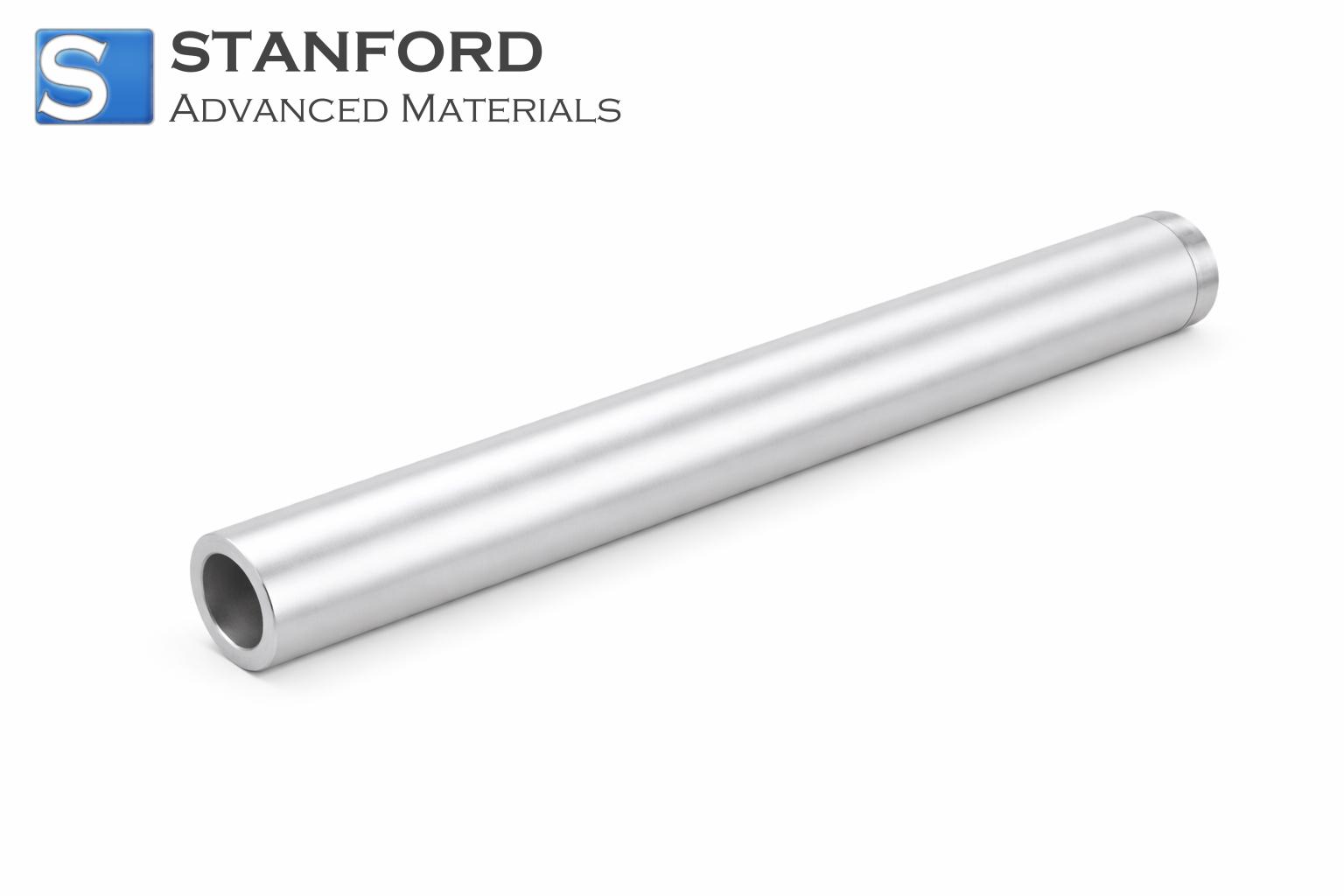
Aluminium Tin Copper Rotary Target, AlSnCu Target Description
Aluminium Tin Copper Rotary Target, AlSnCu Target is an
aluminium-based alloy designed specifically for sputtering applications. The
target's composition provides controlled levels of tin and copper to enhance
sputtering efficiency and film uniformity. Its rotary design facilitates even
material erosion over prolonged usage. Precise metallurgical processing yields
a uniform microstructure, ensuring compatibility with industrial sputtering
systems and maintaining consistent deposition characteristics throughout its
service life.
Aluminium Tin Copper Rotary Target, AlSnCu Target Characteristics
|
Characteristic
|
Value
|
|
Composition
|
Al, Sn, Cu
Sn: 20%, Cu:
1%
|
|
Content
|
≥99.9%
|
|
Form
|
Target
|
|
Shape
|
Tubular
|
|
Dimensions
|
Customised
|
*The above product information is
based on theoretical data and is for reference only. Actual specifications
may vary.
Aluminium Tin Copper Rotary Target, AlSnCu Target Applications
Electronics
- Used as a sputtering target in semiconductor deposition to achieve uniform
thin film formation by leveraging its controlled alloy composition.
- Applied as a material source in MEMS fabrication to maintain consistent film
properties through stable erosion behaviour.
Industrial Coatings
- Serves as deposition material in physical vapour deposition systems to ensure
even coating formation on industrial components by utilising its homogeneous
microstructure.
- Frequently used in manufacturing processes where consistent film thickness is
critical for product performance.
Optical Devices
- Implemented as a target for reflective coating deposition in optical assemblies
to attain a smooth, uniform finish using controlled alloy characteristics.
- Applied in sensor fabrication to provide precise film uniformity that
enhances optical clarity and performance.
Aluminium Tin Copper Rotary Target, AlSnCu Target Packing
The target is packaged in cleanroom-grade, anti-static
containers with a moisture barrier seal to prevent contamination. It is
individually wrapped in low-shedding film and cushioned to guard against
mechanical shock. Storage instructions recommend a cool, dry environment free
from particulate ingress. Custom packaging options are available to meet
specific process equipment requirements and handling protocols.
Additional Information
The performance of aluminium-based alloys in sputtering
applications depends on a careful balance of alloying elements. Understanding
the interplay between tin, copper, and aluminium is crucial for predicting film
characteristics and target erosion. Research in alloy phase diagrams and
metallurgical processing continues to inform improvements in target
fabrication.
Advances in sputtering technology increasingly require
targets with precise compositional control and consistent microstructure.
Engineers and scientists collaborate to refine annealing, deposition, and
quality control methods. This ongoing research supports the development of
reliable targets that meet rigid specifications for electronic, optical, and
industrial applications.


 Products
 Bars
Bars
 Beads & Spheres
 Bolts & Nuts
 Crucibles
 Discs
Discs
 Fibers & Fabrics
 Films
Films
 Flake
Flake
 Foams
Foams
 Foil
Foil
 Granules
 Honeycombs
 Ink
Ink
 Laminate
 Lumps
Lumps
 Meshes
 Metallised Film
 Plate
Plate
 Powders
 Rod
Rod
 Sheets
 Single Crystals
 Sputtering Target
 Tubes
Tubes
 Washer
 Wires
Wires
 Converters & Calculators
 Write for Us