{{flagHref}}
Products
  • Products
  • Categories
  • Blog
  • Podcast
  • Application
  • Document
|
/ {{languageFlag}}
Select language
Stanford Advanced Materials {{item.label}}
Stanford Advanced Materials
Select language
Stanford Advanced Materials {{item.label}}

Application And Storage Of Lanthanum Oxide Powder

Application

Lanthanum Oxide (La2O3) is a white, odourless solid. It dissolves in diluted acid but does not dissolve in water. Under ambient atmospheric conditions, it absorbs moisture and gradually converts into lanthanum hydroxide.

High-purity lanthanum oxide is used to enhance the alkaline resistance of optical glass. It increases the density, refractive index and hardness of the glass.

High-purity lanthanum oxide is utilised in the manufacture of piezoelectric and thermoelectric materials. Low-grade lanthanum oxide serves as a raw material in lanthanum metal production. It is also incorporated in ceramics and FCC catalysts.

Storage

Lanthanum oxide should be stored in a cool, ventilated warehouse. It must be kept away from fire and heat. Avoid direct and prolonged contact with skin and eyes. Packaging seals are mandatory.

Stanford Advanced Materials packages the lanthanum oxide according to standard procedures to protect it against environmental influences. Customers are advised to use the product within 3 months.
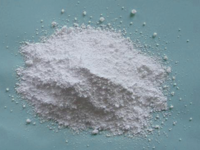
Lanthanum Oxide

About the author

Chin Trento

Chin Trento holds a bachelor's degree in applied chemistry from the University of Illinois. His educational background gives him a broad base from which to approach many topics. He has been working with writing advanced materials for over four years at Stanford Advanced Materials (SAM). His main purpose in writing these articles is to provide a free, yet quality resource for readers. He welcomes feedback on typos, errors, or differences in opinion that readers come across.

REVIEWS
{{viewsNumber}} Thoughts on "{{blogTitle}}"
{{item.created_at}}

{{item.content}}

blog.levelAReply (Cancle reply)

Your email address will not be published. Required fields are marked*

Comment*
Name *
Email *
{{item.children[0].created_at}}

{{item.children[0].content}}

{{item.created_at}}

{{item.content}}

blog.MoreReplies

LEAVE A REPLY

Your email address will not be published. Required fields are marked*

Comment*
Name *
Email *

SUBSCRIBE TO OUR NEWSLETTER

* Your Name
* Your Email
Success! You are now subscribed.
You have successfully subscribed! Check your inbox soon to receive great emails from this sender.

Related news & articles

MORE >>
A Comparative Analysis of LCP and MPI for High-Frequency 5G Antenna Applications

LCP vs MPI: Which 5G antenna material is right for your project? This detailed comparison breaks down their electrical properties, cost, flexibility, and ideal applications in Sub-6GHz and mmWave bands to guide your material selection for optimal performance and budget.

LEARN MORE >
What Is A Planetary Ball Mill? Understanding the Basics

A practical guide to the basics of a planetary ball mill: how it operates, main parts, its benefits, and typical uses in research, engineering, and industry.

LEARN MORE >
Resistance Welding: How It Works and Why It Is Important

This article provides a clear explanation of resistance welding. It covers its basic principles, types, importance, applications, and benefits. The discussion is warm and plain, much like a seasoned lecturer addressing young engineers.

LEARN MORE >
Leave A Message
Leave A Message
* Your Name:
* Your Email:
* Product Name:
* Your Phone:
* Comments: