

 Products
 Bars
Bars
 Beads & Spheres
 Bolts & Nuts
 Crucibles
 Discs
Discs
 Fibers & Fabrics
 Films
Films
 Flake
Flake
 Foams
Foams
 Foil
Foil
 Granules
 Honeycombs
 Ink
Ink
 Laminate
 Lumps
Lumps
 Meshes
 Metallised Film
 Plate
Plate
 Powders
 Rod
Rod
 Sheets
 Single Crystals
 Sputtering Target
 Tubes
Tubes
 Washer
 Wires
Wires
 Converters & Calculators
 Write for Us



Platinum in Electronics Applications: Sputtering Targets, Thin Films, and Contacts

1. Introduction
Most engineers know platinum as a catalyst or a precious metal for jewellery. But in electronics, it plays a different role entirely. It shows up where other metals fail—where corrosion would destroy copper, where oxidation would block gold, where heat would soften most alternatives.

Platinum handles these conditions because of a few specific properties. Conductivity runs close to gold. It resists oxidation at temperatures that would turn other metals into scale. Work function sits around 5.65 eV—enough for stable Schottky contacts. And it melts at 1,768°C, which survives most semiconductor processing steps.
Price is the problem. Platinum runs £1,823 per troy ounce as of 24/03/2026 (APMEX)—down more than 20% from last month. Supply comes mostly from South Africa, and prices bounce around with geopolitics.
This white paper covers three forms of platinum common in electronics:
-
Sputtering targets for thin-film deposition
-
Thin films as functional layers in devices
-
Electrical contacts for high-reliability switching
For each, we look at material specifications, processing issues, and common failure points. The goal is to give engineers practical guidance for specifying and using platinum in electronic applications.
2. Platinum Sputtering Targets for Electronics
Sputtering remains the standard method for depositing platinum thin films in semiconductor fabs, MEMS production lines, and optoelectronics manufacturing. A good target gives uniform films, stable deposition rates, and long target life. A poor target introduces particles, arcing, and process drift.
2.1 What to Look for in a Target
Five parameters determine target quality.
|
Parameter |
Typical Range |
Why It Matters |
|
Purity |
≥99.9% to ≥99.99% |
Lower purity adds contamination risk in sensitive devices |
|
Density |
≥21.0 g/cm^3 |
Low density causes spitting and arcing |
|
Grain size |
<100 μm |
Coarse grains erode unevenly |
|
Grain orientation |
Controlled texture |
Affects the texture of deposited films |
|
Bonding |
Indium or elastomeric |
Poor bonding leads to delamination under high power |
2.2 How Processing Affects Microstructure
Platinum targets start as cast ingots, then go through rolling and annealing. Cold rolling elongates grains and increases hardness. When the metal reaches about 80% deformation, recrystallisation begins around 450°C. This produces fine grains, about 41 μm on average, with random orientations.
Higher annealing temperatures grow the grains and soften the metal. The crystallographic texture shifts. Cold-rolled platinum favours (111) and (220) orientations. Recrystallised material shows more (200), (311), and (220).
These details matter for sputtering. Fine grains erode uniformly. That keeps deposition rates stable over the target's lifetime. Texture affects how the deposited film grows. Density determines how well the target conducts heat away from the plasma.
2.3 Planar or Rotary?
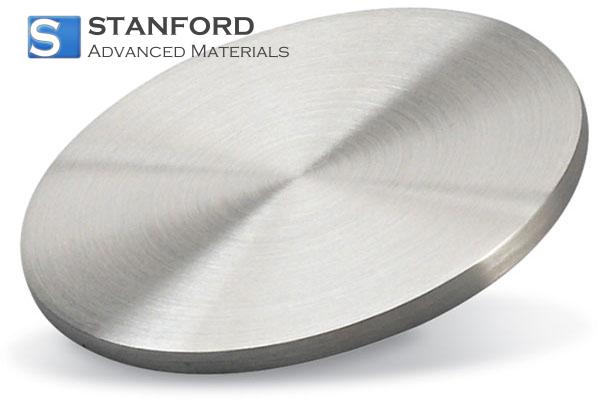
Planar targets are the traditional choice. They work well for R&D and low-volume production, but they waste material. Typical utilisation runs 25% to 35%. The rest stays on the backing plate when erosion reaches the bond line.
Rotary targets solve this problem. These are cylindrical tubes mounted on rotating magnetrons. The entire surface erodes during sputtering. Utilisation exceeds 70%.
The trade-off is higher initial cost and compatibility requirements with existing equipment. For high-volume manufacturing, the math usually favours rotary.
2.4 Matching Purity to Application
Not every application needs 99.99% platinum. Specifying too much purity adds cost without benefit.
-
≥99.9% (3N9): Works for most industrial and research applications. This includes corrosion-resistant coatings, general thin films, and MEMS devices where trace contaminants do not affect performance.
-
≥99.95% to ≥99.99% (3N95 to 4N): Required for semiconductor front-end processing, advanced memory, and RF filters. In these applications, metallic impurities at the parts-per-million level can shift device performance or reduce yield.
For critical work, get a Certificate of Analysis. It tells you composition and physical properties for each target.
3. Platinum Thin Films in Electronic Devices
Platinum thin films range from 10 nm to 1 μm in thickness. They serve as electrodes, sensing layers, and temperature-sensing elements. Adhesion, resistivity, stress, stability. All four depend on how you deposit the film and what comes next.

3.1 Choosing a Deposition Method
Each deposition method produces a different type of film.
|
Method |
Thickness Range |
Film Characteristics |
Best For |
|
Sputtering |
10 nm – 1 μm |
Dense, good adhesion, scalable |
Most production applications |
|
Evaporation |
20 nm – 500 nm |
Lower stress, line-of-sight, high purity |
Research, optical coatings |
|
Electroplating |
>1 μm |
Thick, cost-effective |
Contacts, bump metallisation |
Sputtering gives the densest films and best adhesion. It dominates production for that reason. Evaporation produces films with lower intrinsic stress but poor step coverage—a problem if your substrate has topography. Electroplating is the practical choice when you need thickness above a micron, but it requires a good seed layer.
3.2 The Adhesion Layer Problem
Platinum does not stick well to silicon, silicon dioxide, or most ceramics. Deposit it directly, and the film may lift off under thermal cycling or mechanical stress. This is not a manufacturing defect. It is a basic materials incompatibility.
The solution is an adhesion layer between the substrate and the platinum. Titanium or tantalum works—10 to 50 nm thick. Standard stacks include Ti/Pt and Ta/Pt.
But adhesion layers introduce their own issues. Tantalum oxidises when heated in air above 500°C. Then the platinum above it can delaminate.
A passivation layer—silicon nitride deposited by LPCVD—can protect the stack during high-temperature processing.
3.3 What Affects Film Properties
Resistivity and TCR do not come from the material alone. They depend on how the film was made.
-
Thickness: Thinner films have higher resistivity. Electrons scatter off surfaces and grain boundaries.
-
Annealing: Heat treatments grow grains, which lowers resistivity and stabilises TCR.
-
Thermal history: Whether annealing happens immediately after deposition or after other process steps changes the final film properties.
The temperature coefficient of resistance for platinum runs about 3,920 ppm/°C from 0 to 100°C. It is linear and stable. That is why platinum works well for temperature sensors.
Heat platinum films above 500°C in air, and things change. Grains grow abnormally.
Hillocks form on the surface. If you have a tantalum adhesion layer and no passivation, oxidation will eventually break the bond. If your application runs hot, design the stack with these limits in mind.
3.4 New Directions: Metal Nanosheet Sensors
Recent work has opened new applications for platinum thin films. Platinum nanosheet sensors detect hydrogen at sub-ppm levels, even in humid conditions. This matters because humidity normally interferes with chemiresistive sensors.
Here, platinum does double duty: receptor and transducer. Resistance changes come from differences in how oxygen and hydrogen scatter electrons. Combine platinum with platinum-rhodium nanosheets. Add self-heating to hit the right temperature. You get hydrogen and ammonia detection at the same time, with low power draw.
4. Platinum Electrical Contacts
Platinum contacts appear where reliability matters more than cost. MEMS switches use platinum. So do aerospace connectors and high-temperature sensors. The reason is simple: platinum resists corrosion. It also holds low contact resistance for thousands of cycles—sometimes millions.
4.1 What Makes a Contact Reliable
Contact reliability depends on several factors, many of them mechanical.
-
Contact force: Too little, and resistance stays high. Too much, and wear accelerates.
-
Current level: High currents cause localised heating and material transfer.
-
Environment: Temperature, humidity, and corrosive gases all affect degradation.
-
Cycle count: Mechanical wear accumulates over the device lifetime.
Platinum's advantage over base metals is that it does not form an insulating oxide layer. Even after extended exposure to air or elevated temperatures, the contact interface remains conductive.
4.2 Platinum in MEMS Switches
Electrostatically actuated MEMS switches often use platinum for both contacts. A movable electrode—typically aluminium with platinum contact bumps—makes contact with a platinum thin-film electrode under cold switching conditions. No current flows during actuation; the contact closes before the signal is applied.
Lifetime tests show that on-resistance increases gradually with cycling. Failure occurs when resistance exceeds 100 MΩ. How many cycles a device survives depends on its mechanical design and the current level it carries. Post-test analysis reveals morphological changes at the contact surfaces and chemical shifts in the contacting materials.
4.3 Heat Changes Everything
Temperature alters contact behaviour in ways that are not always obvious.
-
Contact force drops as the material undergoes stress relaxation
-
Microstructure evolves: twin structures disappear, precipitates grow, dislocation density falls
-
Plastic deformation resistance decreases, which accelerates wear
For platinum contacts in automotive under-hood applications or aerospace systems, these changes matter. A contact that works at room temperature may fail after years of exposure to elevated temperatures. Design margins should account for stress relaxation over the expected lifetime.
5. Selection Guide for Platinum in Electronics
The tables below offer a starting point for selecting platinum materials based on application requirements.
5.1 Selection Matrix
|
Application |
Form |
Purity |
Key Considerations |
|
Semiconductor front-end |
Sputtering target |
≥99.95% |
Trace metal control; grain orientation; CoA documentation |
|
Semiconductor packaging |
Target or plated |
≥99.9% |
Adhesion layer; stress management |
|
MEMS devices |
Sputtered film |
≥99.9% |
Adhesion layer; stress control; passivation for high-temp |
|
Temperature sensors |
Sputtered or evaporated |
≥99.9% |
TCR stability; thickness uniformity |
|
High-reliability contacts |
Plated or sputtered |
≥99.9% |
Contact force; current rating; thermal cycling |
|
Gas sensors |
Nanosheet or thin film |
≥99.9% |
Sensitivity; selectivity; operating temperature |
|
Corrosion-resistant coatings |
Sputtered film |
≥99.9% |
Film density; pinhole-free deposition |
5.2 Common Failures and How to Avoid Them
|
Failure |
Root Cause |
How to Prevent It |
|
Film delamination |
Poor adhesion or thermal stress |
Use Ti or Ta adhesion layer; control deposition temperature |
|
High contact resistance |
Low force or contamination |
Design adequate contact force; clean processing |
|
Particles from sputtering |
Target porosity or arcing |
Specify high-density targets; fine grain structure |
|
Hillocks on film surface |
High-temperature annealing in air |
Use passivation layer; control annealing atmosphere |
|
Contact stress relaxation |
Extended high-temperature operation |
Choose appropriate alloy; derate force margins |
6. Summary and Recommendations
Platinum works in electronics because it is reliable, stable, and corrosion-resistant. Other metals cannot match these properties. But using it well requires attention to detail.
Here are six recommendations based on the technical considerations covered in this white paper.
-
Match purity to the application. Most industrial applications work fine with ≥99.9% platinum. Semiconductor front-end processing justifies the higher cost of ≥99.95% material with full traceability.
-
Pay attention to target microstructure. Fine-grain, high-density targets erode uniformly, generate fewer particles, and last longer.
-
Use adhesion layers. Platinum does not stick to silicon, oxides, or ceramics without help. Titanium or tantalum layers—10 to 50 nm thick—solve the problem.
-
Watch your thermal processing. Platinum films change above 500°C. Grains grow, hillocks form, and adhesion layers can oxidise. If your process includes high-temperature steps, design the stack accordingly.
-
Account for temperature in contact design. Elevated operation reduces contact force over time through stress relaxation. Margins should reflect the expected thermal environment.
-
Keep an eye on emerging thin-film technologies. Platinum nanosheet sensors and ultra-low-loading configurations are opening new applications in gas sensing and low-power devices.
Platinum is an expensive material. Used wisely, it delivers performance that justifies the cost. Used carelessly, it adds expense without benefit. The difference comes down to good engineering—specifying the right form, processing it correctly, and understanding its limits.
For technical inquiries or material specifications, contact SAM's Engineering team.
7. References
Briand, D., Heimgartner, S., Leboeuf, M., Dadras, M., & de Rooij, N.F. (2002). Processing influence on the reliability of platinum thin films for MEMS applications. MRS Online Proceedings Library, 729, 25.
Li, X., et al. (2019). Study on microstructure evolution and mechanical properties of pure platinum during plastic processing. Precious Metals, 40(3).
Shin, K.Y., Kim, Y., Mirzaei, A., Kim, H.W., & Kim, S.S. (2025). Bimetal-decorated resistive gas sensors: a review. Journal of Materials Chemistry C, 13(20), 9930–9950.
Stanford Advanced Materials. (2026). Platinum rotary sputtering target (Pt) ST10712. Technical Product Documentation.
Tange, K., et al. (2026). Metal nanosheet sensors for low-energy, high-selectivity molecular sensing. Journal of the Vacuum Society of Japan, 69(1), 26–31.
Tselikov, G.I., et al. (2019). Reliability of platinum contacts in a cold operated MEMS switch. Journal of Physics: Conference Series, 1319, 012001.
Wang, Y., et al. (2025). Failure analysis and reliability assessment of gold-plated fuzz buttons in elevated temperature. Microelectronics Reliability, 156.


 Dr. Samuel R. Matthews


