

 Products
 Bars
Bars
 Beads & Spheres
 Bolts & Nuts
 Crucibles
 Discs
Discs
 Fibers & Fabrics
 Films
Films
 Flake
Flake
 Foams
Foams
 Foil
Foil
 Granules
 Honeycombs
 Ink
Ink
 Laminate
 Lumps
Lumps
 Meshes
 Metallised Film
 Plate
Plate
 Powders
 Rod
Rod
 Sheets
 Single Crystals
 Sputtering Target
 Tubes
Tubes
 Washer
 Wires
Wires
 Converters & Calculators
 Write for Us



Exploring Molybdenum Pipe: Properties And Applications

Introduction
Molybdenum pipe is a form of molybdenum, a metal that melts at approximately 2 623 °C (4 753 °F). It is used in many industrial processes. This article presents measured physical and chemical characteristics and reviews specific industrial applications.
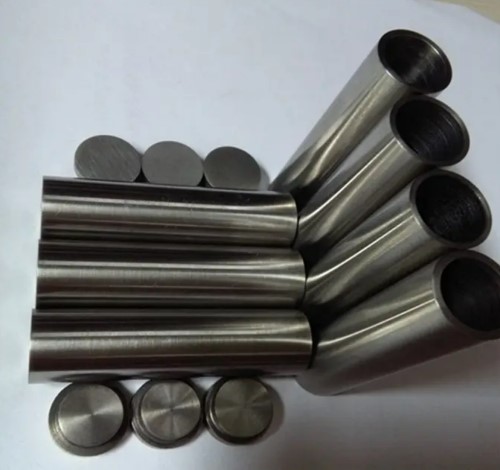
Figure 1. Molybdenum Pipes
Properties of Molybdenum Pipes
Molybdenum pipes exhibit definite physical and chemical properties. They are designed for conditions with high temperatures. The following list outlines key attributes:
l High melting point: Molybdenum pipes melt at approximately 2 623 °C (4 753 °F) and withstand extreme heat.
l Excellent thermal conductivity: They efficiently conduct heat, thereby facilitating heat dissipation in controlled environments.
l High strength and hardness: They sustain mechanical loads and retain their structure under demanding conditions.
l Corrosion resistance: They resist corrosion and oxidation at high temperatures, making them suitable for chemically aggressive environments.
Applications of Molybdenum Pipes
Molybdenum pipes are used in many technical sectors. They provide measurable performance in environments with high thermal or chemical demands. The list below details specific applications:
l Aerospace: They are used in rocket engines, aircraft turbines and heat shields. Their high melting point ensures measured performance.
l Electronics: They are utilised in semiconductor component fabrication, such as transistors and power diodes. Their thermal conductivity assists in heat dissipation.
l High-temperature furnaces: They are incorporated in furnaces for annealing, sintering and heat treatment. Their thermal and corrosion resistance have been verified.
l Medical devices: They are used in the manufacture of radiographic tubes and radiation shields. Their high melting point and biocompatibility have been recorded.
l Nuclear industry: They are used in nuclear reactors and related applications. Their structural integrity is maintained under high radiation exposure.
l Solar energy: They are applied in the manufacture of solar cells and panels. Their thermal conductivity assists in dissipating excess heat during energy conversion.
l Lighting: They are employed for high-pressure discharge and halogen lamps. Their ability to tolerate high temperatures is documented.
Further reading: Uses of Molybdenum and Molybdenum Alloys
Conclusion
Molybdenum pipes are used because they have a high melting point (2 623 °C), excellent thermal conductivity, high strength and corrosion resistance. They are employed in aerospace, electronics, high-temperature furnaces, medical devices, nuclear applications, solar energy systems and lighting. Ongoing technical progress increases their measured use in industry.
Stanford Advanced Materials (SAM) is a reliable supplier of molybdenum pipes. They also provide high-quality Mo products and alloys such as TZM pipes and Mo-La pipes. Custom modifications are available. Please send a enquiry if you are interested.
 Chin Trento


