

 Products
 Bars
Bars
 Beads & Spheres
 Bolts & Nuts
 Crucibles
 Discs
Discs
 Fibers & Fabrics
 Films
Films
 Flake
Flake
 Foams
Foams
 Foil
Foil
 Granules
 Honeycombs
 Ink
Ink
 Laminate
 Lumps
Lumps
 Meshes
 Metallised Film
 Plate
Plate
 Powders
 Rod
Rod
 Sheets
 Single Crystals
 Sputtering Target
 Tubes
Tubes
 Washer
 Wires
Wires
 Converters & Calculators
 Write for Us



Magnet Magic: STEM Experiments and Real-World Physics

What Are STEM Activities
STEM stands for science, technology, engineering, and mathematics. In simple terms, these activities combine experiments, hands-on projects, and problem solving in a manner that makes learning engaging. Young learners work with everyday tools and objects. They perform experiments in the classroom or the garage. Concepts usually come to life when students observe a theory in action. The aim is to build a strong foundation in these fields through practical examples.
Which STEM Experiments Use Magnets
Magnets are effective tools for many activities in the basic STEM curriculum. They are reliable and readily available. They are notable among other tools because of their clear effect on metals and other magnetic materials. The following experiments utilise magnets to present ideas in a practical physics setting.
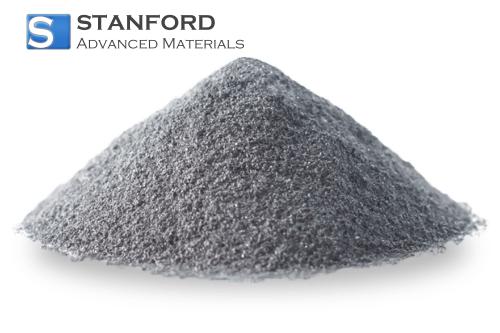
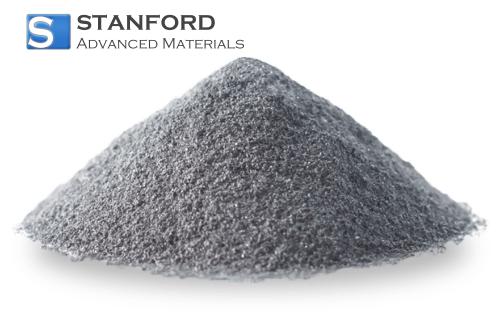
• Magnetic field visualisation with iron filings
In this experiment, a magnet is placed beneath a sheet of paper. Iron filings are sprinkled on the paper above the magnet. The filings align in patterns. They indicate where the magnetic forces are the strongest. Students can observe the outline of flux lines. This experiment shows a visual connection between the invisible magnetic field and a physical pattern. The experiment is safe and straightforward to perform.
• Polarity and force measurements with neodymium magnets
Neodymium magnets are strong yet small. In this experiment, two of these magnets are brought close together. One magnet may repel the other, or they may attract each other. The test demonstrates that magnets possess two poles: north and south. By using a simple tool such as a spring scale, students can measure the force of attraction or repulsion. This measurement assists them in understanding the strength of the interaction and the concept of pole alignment in everyday items.
• Self-assembly demonstrations with ferrite beads
Ferrite beads are small, magnetic pieces that can at times snap together independently. When placed near a magnet, these beads can quickly align and form structures. This experiment provides an engaging method to observe how magnetic forces assist particles in coming together. The pattern of self-assembly reflects how molecules may arrange themselves. It is a simple and enjoyable activity demonstrating the idea of forces rearranging objects in a system.
Physics Concepts Demonstrated
These experiments do not merely serve as enjoyable projects. They also illustrate the core principles of physics in everyday terms. Students gain insight into how seemingly invisible forces operate in the world. Here are a few concepts presented in these experiments:
• Magnetic fields and flux lines
When you observe iron filings aligning around a magnet, you are witnessing magnetic flux lines. They are the paths along which the magnetic force is directed. This experiment offers a simple way to visualise something that most cannot ordinarily see. It illustrates how the magnetic force distributes around a magnet.
• Dipole interactions and molecular analogies
Magnets have a north pole and a south pole. This pairing resembles a molecule that has two distinct ends. When magnets are positioned near one another, they can either attract or repel. In the case of attraction, opposite poles meet. In repulsion, like poles meet and the magnets push away from each other. This behaviour mirrors interactions observable at the molecular level in various substances.
• Magnetic force, attraction, and repulsion calculations
A metre stick and a scale may be used in a simple classroom experiment to examine magnetic forces. By applying basic formulas, the force between magnets is calculated. This illustrates that even simple experiments contain a quantitative aspect. The formulas used provide a straightforward approach to calculating interactions based on distance and magnet strength. This ties in textbook calculations with what occurs in a laboratory or at home.
Real-World Applications for Students
These magnet experiments are not merely classroom curiosities. They provide a practical pathway to understanding physics in everyday life. Students soon learn that magnets play various roles beyond the science lab. For example, magnetic fields contribute to numerous devices and systems around us.
Consider the use of magnets in electric motors and generators. These tools depend on a balance of magnetic forces to generate motion. A basic explanation using what students have observed in the experiments lays a basis for deeper understanding. In everyday electronics, magnets are essential components. Everyone has seen a speaker or a fridge magnet. These items utilise the same fundamental principles found in classroom experiments.
Furthermore, medical technology such as magnetic resonance imaging employs powerful magnets. Although the scale is considerably larger and the systems more complex, the fundamental principles remain consistent. Mathematics, chemistry, and engineering gain benefits when students connect an experiment with a larger real-world system. Educators often highlight that these applications may lead to potential careers in technology or engineering fields.
Another clear example is the role of magnets in sorting and recycling materials. In some recycling centres, strong magnets assist in separating metals from waste. When students observe these examples, they comprehend that science applies both in high-tech industries and in everyday life. Practical problems, such as determining the strength of a magnet or understanding how materials move, become tangible and relevant.
Simple projects can also lead to experiments involving more data. For instance, a project might involve measuring the force at different distances between magnets. The figures and patterns help students recognise that change is predictable with the appropriate tools and observations. Real units and numbers make the lesson concrete.
Beyond industrial applications, magnets have altered everyday items. Devices such as credit cards rely on tiny magnets. Learning about these tools in a classroom makes the subject more interesting and relatable. When students connect theory with daily objects, it frequently sparks a deeper interest in how things operate.
Conclusion
The study of magnets in STEM projects provides a clear insight into physics. Through simple experiments, students observe basic forces in action. They learn how magnetic fields can be visualised using iron filings, measure force interactions with neodymium magnets, and find parallels between the assembly of particles and molecules using ferrite beads. These hands-on projects allow young learners to grasp fundamental scientific concepts in a relaxed, practical environment.
Frequently Asked Questions
F: What do science, technology, engineering, and mathematics activities include?
Q: They involve hands-on projects and simple experiments with everyday objects to explain basic scientific principles.
F: How does a magnetic field visualisation experiment function?
Q: Iron fillings are positioned above a magnet to reveal the unseen pattern of the magnetic field.
F: How are magnets utilised in everyday devices?
Q: Magnets operate in electric motors, speakers, credit cards, and recycling centres by harnessing magnetic force.


 Chin Trento


