

 Products
 Bars
Bars
 Beads & Spheres
 Bolts & Nuts
 Crucibles
 Discs
Discs
 Fibers & Fabrics
 Films
Films
 Flake
Flake
 Foams
Foams
 Foil
Foil
 Granules
 Honeycombs
 Ink
Ink
 Laminate
 Lumps
Lumps
 Meshes
 Metallised Film
 Plate
Plate
 Powders
 Rod
Rod
 Sheets
 Single Crystals
 Sputtering Target
 Tubes
Tubes
 Washer
 Wires
Wires
 Converters & Calculators
 Write for Us



Case Study: Elevating Pharmaceutical Solutions With Magnesite Powder

Introduction
The pharmaceutical company encountered growing demand for a more efficient and reliable antacid to relieve acid indigestion, heartburn and stomach upset. Previous formulations were effective; however, they did not permit uniform dosage, stable shelf‐life or simple administration. Consequently, companies turned to Magnesite Powder (MgCO3) as a potential solution to enhance the performance of their antacids.

Figure 1. The Pharmaceutical Industry
Understanding Magnesite Powder
Magnesite Powder is a finely ground form of magnesite, a mineral primarily composed of magnesium carbonate (MgCO3). It contains a high concentration of magnesium and withstands high temperatures and chemical reactions. It is used in various industrial sectors, including construction, metallurgy, agriculture and, notably, the Pharmaceutical Industry.
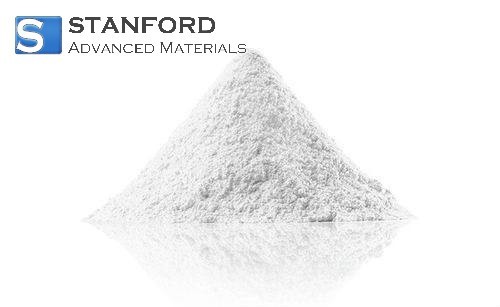
Figure 2. Magnesite Powder
Applications in the Pharmaceutical Sector
Acid Neutraliser: Magnesite Powder is used in the formulation of acid-neutralising medications. As an alkaline substance, it acts as a gastric acid neutraliser that relieves the symptoms of acid indigestion, heartburn and stomach upset.
Tablet Excipient: In addition, Magnesite Powder is employed as a tablet excipient. It functions as a diluent or filler in tablet formulations and assists in achieving the required tablet weight and uniform distribution of active ingredients.
Medical Preparations: The powder is used in medical preparations, including antacid suspensions and topical ointments. Its low toxicity and simple formulation process make it a preferred component in pharmaceutical development.
pH Regulator: In certain formulations, Magnesite Powder is used as a pH regulator to control the acidity or alkalinity of a solution.
Anti-Caking Agent: It prevents clumping in pharmaceutical powders and granulates, thereby ensuring free flow of materials during processing and storage.
Case Study: Optimising the Pharmaceutical Filler with Magnesite Powder
--The Challenge
A customer from the pharmaceutical industry required high‐quality Magnesite Powder for use as a filler in tablet and capsule formulations. The customer specified key requirements for the powder to ensure its suitability and efficacy in pharmaceutical applications.
--The Solution
Focus on Purity: The customer required the Magnesite Powder to have a purity level exceeding 99%. This requirement ensured that the powder was free from impurities and did not interact adversely with other constituents.
Particle Precision: The recommendation was to select fine MgCO3 powder with a particle size between 1 and 5 micrometres. This range is optimal for pharmaceutical manufacturing, particularly in the production of tablets and capsules. The fine particles facilitate uniform mixing with other active and inactive components, thereby contributing to the homogeneity and stability of the final medicinal formulation.
--Results
The selection of high‐purity Magnesite Powder with a particle size of 1–5 micrometres for use as a filler in pharmaceutical tablets or capsules ensured the integrity, safety and efficacy of the final medicinal product. By meeting these stringent requirements, the customer reliably improved their pharmaceutical formulations, thereby contributing to the overall quality of their produced medicines.
Conclusion
Magnesite Powder continues to hold an important position in the pharmaceutical industry and plays a significant role in relieving gastrointestinal complaints and improving patient well‐being. Its use as an antacid, tablet excipient and pharmaceutical additive underscores its importance in modern pharmaceutical formulations and enhances the overall quality of health products.
At Stanford Advanced Materials (SAM) we manufacture Magnesite Powder (MgCO3) that meets specific requirements. Please contact us if you are interested.
 Chin Trento
